
I Killed My First Terrarium in Two Weeks. Here’s What Nobody Told Me…

The jar was beautiful on day one. Twelve days later, it smelled like a wet sock stuffed inside a gym bag.
I remember unscrewing the lid and this wave of warm, sour air hitting my face. The two seedlings I had carefully planted were slumped over, their veins fading from bright pink to a muddy brown. White fuzz covered every surface of the soil. The moss I had tucked around the base was slimy to the touch.
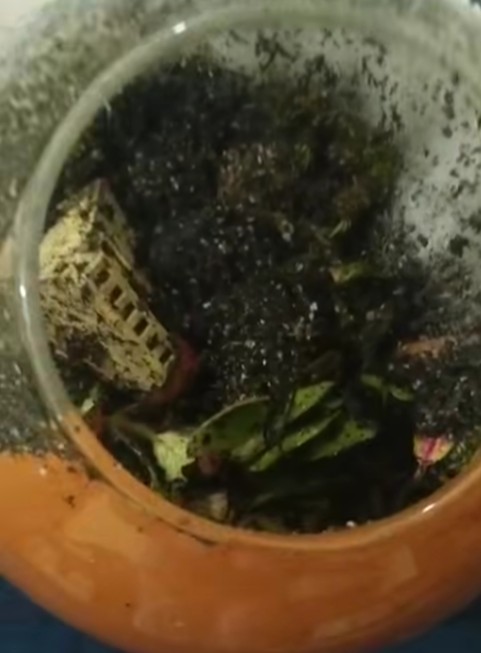
Yes, I killed my first Terrarium in two weeks. And looking back, every single thing that went wrong was something a five-minute conversation with an experienced builder would have prevented. But I didn’t know any experienced builders. I had YouTube, a mason jar, and too much enthusiasm.
This is that five-minute conversation. Except it’s going to be longer than five minutes because I want to explain not just “what” killed my terrarium, but “why” it happened on a level that most guides never get into. If you’re about to build your first terrarium, or you just watched yours die and you’re wondering what went wrong, this is for you.
A Quick Bit of Context About Me
If you’ve read my About page, you know the outline. I’m Eamin Hosen, a content writer based in Dhaka, Bangladesh. Late 2021, I was burning out from freelance work and stumbled onto terrarium videos on YouTube. Went to a nursery in Katabon the next day, bought two Fittonia seedlings and an old mason jar, followed an English tutorial, sealed it up, and waited for magic.
What I got was mold.
But that story deserves more than a paragraph, because the details of how it failed are where the actual lessons live. So let me walk through exactly what happened, step by step, and then break down the science that nobody in that YouTube tutorial bothered to mention.
What I Actually Did (Step by Step)
Here’s my exact setup from that first build. I’m being specific because every single choice I made had a consequence.
The container: A clear glass mason jar, roughly 1.5 liters. Straight sides, wide mouth, metal screw lid. I picked it because it was already in my kitchen.
The “drainage layer”: A thin scattering of small pebbles from outside my apartment building. Maybe 1 cm deep. I didn’t wash them.
The substrate: Garden soil from a nursery in Katabon. Regular garden soil, not potting mix. Not sterilized. Not mixed with anything.
The plants: Two Fittonia albivenis (nerve plants), one with red veins, one with white. They were small, maybe 8 cm tall.
The moss: A small patch of live moss I found growing on a brick wall near my building. I peeled it off and placed it on top of the soil around the Fittonias.
The water: I sprayed the inside with a regular spray bottle. A lot. I wanted to make sure everything was moist. The glass fogged up almost immediately.
The placement: On my windowsill. The window faces south. In Dhaka. In late 2021, which meant daytime temperatures hitting 28 to 30°C outside, and direct afternoon sun streaming through that window.
The seal: I screwed the lid on tight. The tutorial said seal it and let the water cycle do its thing.
I did everything the video said. And everything died.
Mistake #1: I Turned the Jar Into a Pressure Cooker
This is the thing that nobody explained to me, and honestly, most terrarium content still doesn’t explain it clearly enough.
A sealed glass jar in direct sunlight doesn’t just get warm. It becomes a greenhouse inside a greenhouse. Sunlight passes through the glass, gets absorbed by the dark soil and stone surfaces inside, and converts into infrared heat. But infrared radiation doesn’t pass back out through glass easily. So the heat gets trapped. On a 30°C day in Dhaka, the internal temperature of that jar could easily hit 40 to 45°C within an hour of direct sun.
Here’s the part I didn’t know: glass is not a good insulator. It’s a thermal conductor. Making the glass thicker doesn’t protect the plants inside. The heat gets through regardless. And if the glass is curved, like a round jar or bottle, it can actually focus sunlight into concentrated hot spots that scorch plants even when the room doesn’t feel that warm.
To understand why this matters, think about where Fittonia actually comes from. *Fittonia albivenis* is native to the tropical rainforests of Peru, Colombia, Ecuador, and Bolivia. But it doesn’t grow out in the open. It’s a forest-floor plant. It lives under the dense canopy, in deep shade, where temperatures sit between 18 and 24°C and almost never exceed 29°C. The light that reaches it is filtered and dappled. Direct sunlight would kill it in the wild too.
I was baking a shade-loving plant from the Peruvian understory on a south-facing windowsill in Dhaka’s subtropical heat. That alone was probably enough to do it in. But it wasn’t the only problem.
Mistake #2: I Drowned It Before I Sealed It
When the tutorial said “mist the inside,” I interpreted that as “make everything wet.” I sprayed until there were visible droplets running down the glass walls. The soil was soaked. The moss was dripping.
Then I sealed the lid.
What I didn’t understand is the single most important concept in closed terrarium management: the condensation cycle. A healthy sealed terrarium should show a light mist on the glass that appears and disappears throughout the day, tracking temperature changes. In the morning, when the jar cools, you see a faint haze of tiny droplets. As the day warms up, they evaporate. The water cycles continuously: soil to air to glass to soil.
The rule of thumb that experienced builders use is this: if you can see your plants clearly through the glass most of the time, with only a light haze of condensation that comes and goes, your moisture level is right. If the glass is completely fogged out and you can’t see through it, with fat droplets streaming down the sides all day, you have far too much water.
Mine was fogged out from the moment I sealed it. And it never cleared.
Here’s something even more interesting that I only learned much later. In 2022, I came across a study discussed by NASA’s life sciences division about ethylene gas buildup in sealed plant environments. Ethylene is a gaseous hormone that plants produce naturally, especially when they’re stressed. In open air, it disperses harmlessly.
But in a sealed container, it accumulates. And ethylene is autocatalytic, which means that once its concentration passes a certain threshold (as low as 20 to 100 parts per billion), it triggers a feedback loop where stressed plants produce even “more” ethylene. The result is a chain reaction of symptoms: leaves curling downward (a condition called epinasty), accelerated yellowing, premature leaf drop, and suppressed growth. NASA documented this exact problem when studying plants in closed life support systems for long-duration spaceflight.
Nobody talks about this in the terrarium hobby. But it helps explain something I noticed and couldn’t figure out at the time: why my Fittonias seemed to be wilting even though the soil was clearly wet. They weren’t thirsty. They were being gassed by their own stress hormones in a sealed, overheated container with no air exchange.
Mistake #3: I Imported an Entire Ecosystem I Didn’t Ask For
That moss I peeled off the brick wall? It came with passengers.
When you collect moss or soil from outside, you’re not just getting moss. You’re bringing in an entire microscopic world: fungal spores, bacteria, mites, nematodes, insect eggs. In open air, these organisms exist in balance because they have predators, competitors, and enough space to spread out. Put them inside a warm, sealed, wet glass jar, and you’ve just handed them the most favorable environment imaginable with zero competition.
The white fuzz that colonized my terrarium within the first week was almost certainly a fast-growing saprophytic mold, likely from the genera Trichoderma or Rhizopus. These are common soil fungi that feed on decaying organic matter. In normal outdoor conditions, they’re harmless, even beneficial. They help break down dead leaves on forest floors. But inside my overwatered, overheated, poorly ventilated jar, they exploded.
Here’s something worth knowing about identifying what you’re seeing. Not all white fuzzy growth in a terrarium is harmful mold. Sometimes it’s mycelium, which are fine, threadlike fungal networks that run through the substrate and actually help plants absorb nutrients and water. Mycelium looks like thin white hairs or threads, and it’s a sign of a healthy soil ecosystem. Mold, on the other hand, forms distinct fluffy or cotton-like patches on the soil surface, on wood, or on decaying plant matter. If the fuzzy white stuff you’re seeing is connected to healthy-looking soil and isn’t spreading aggressively, it might be fine. If it’s a puffy cloud sitting on top of something that’s turning brown and soft, that’s mold eating dead material.
In my case, it was unmistakably mold. And the reason it spread so fast comes down to something the terrarium community calls “New Terrarium Syndrome.”
The Concept Nobody Warned Me About: New Terrarium Syndrome
If you’ve kept aquariums, you might be familiar with “New Tank Syndrome.” It’s the chaotic period in the first few weeks after setting up a new fish tank, before the nitrogen cycle establishes itself and the water chemistry stabilizes. Fish often die during this period, not because the tank is inherently flawed, but because the biological systems haven’t had time to mature.
Terrariums go through the exact same thing. And just like with aquariums, most failures happen during this window.
During the first two to four weeks of a new sealed terrarium, the ecosystem inside is essentially a blank slate. The microbial community in the soil hasn’t established itself. The fungal networks haven’t grown. The balance between decomposers and plant roots hasn’t been worked out. So what you get during this period is instability: mold blooms, condensation swings, and stressed plants. That’s normal. It doesn’t mean your terrarium is ruined.
The problem is that most beginners (me included, in 2021) see the first patch of mold and panic. They either rip the whole thing apart, or they seal it up tighter and try to ignore it, or they drown it in more water because the plants “look thirsty.” All three of those responses make things worse.
What actually works is patience combined with small interventions. If mold appears during the first few weeks, the correct response is to open the lid for a few hours to let excess moisture escape, manually remove the mold with clean tweezers, trim any dead or rotting plant material, and then reseal. The ecosystem will eventually find its balance. Most minor mold outbreaks resolve on their own once the microbial community matures.
But I didn’t know any of this. I saw mold on day five, panicked, and sealed the jar tighter. By day eight, the mold had tripled. By day twelve, the plants were dead.
The Fix I Didn’t Know Existed: Springtails
Here’s the single most important piece of information I wish someone had given me before I built that first terrarium: “get springtails.“
Springtails (order Collembola) are tiny arthropods, usually 1 to 2 mm long, that live in moist soil. They’re everywhere in nature but almost invisible because of their size. And they are, without exaggeration, the closest thing to a silver bullet the terrarium hobby has.
Their job is simple. They eat mold. They eat decaying plant matter. They eat fungal spores. They’re detritivores: they consume the exact things that cause problems in a sealed terrarium, and they turn them into nutrients that plants can use.
What makes springtails remarkable from a scientific perspective is their adaptations. Research published through NIH has shown that Collembola have a specialized hydrophobic (water-repelling) cuticle that allows them to thrive in exactly the wet conditions that terrariums provide. They’re also used as bioindicator organisms in soil ecology studies because they’re sensitive to environmental changes, which means if your springtails are alive and breeding, your terrarium environment is healthy.
In practical terms, adding a starter colony of springtails to a new terrarium effectively short-circuits New Terrarium Syndrome. They colonize the substrate, start consuming mold before it can spread, and establish a baseline cleanup system that runs itself. They don’t harm plants. They don’t bite. They’re essentially invisible once they’ve settled in.
Today, I add springtails to every single terrarium I build. Every one. It’s the single change that made the biggest difference to my success rate. That first terrarium in 2021 might have survived if I’d known about them.
The challenge in Dhaka is finding them. They’re not sold at plant nurseries here. You can sometimes culture your own by collecting leaf litter from damp, shaded soil and keeping it in a ventilated container with a piece of bark and some rice. The springtails will eventually show up and breed. It takes a few weeks, but once you have a colony going, you’ll never run out.
What I Should Have Done Differently
If I could go back to that day in Katabon and rebuild that terrarium with what I know now, here’s exactly what I would change.
Container: Same mason jar, but I’d place it on a shelf that gets bright, indirect light. No direct sun. Never direct sun, especially in Dhaka’s climate where ambient indoor temperatures in summer can hit 32°C without air conditioning.
Drainage layer: At least 2 cm of clean, washed pebbles or LECA (lightweight expanded clay aggregate). Not a sad sprinkle. A proper layer that can hold excess water away from the roots.
Separation barrier: A thin layer of sphagnum moss or a piece of mesh fabric on top of the drainage layer, to stop the soil from sinking down into the pebbles and turning the bottom into mud.
Activated charcoal: A thin layer (about 0.5 cm) between the barrier and the soil. Activated charcoal works through adsorption: its porous structure binds volatile organic compounds, toxins, and odors that build up in sealed systems. It’s not a cure-all, and it does lose effectiveness over time (generally saturating after 6 to 18 months), but in the early months of a terrarium’s life, it provides a meaningful buffer. One important note: you need horticultural-grade activated charcoal, not barbecue charcoal, which contains chemical additives that will harm your plants.
Substrate: A proper terrarium mix (coco coir, perlite, and a small amount of worm castings), not raw garden soil. Garden soil compacts, holds too much water, and carries unknown organisms.
Plants: Same Fittonias, they’re actually perfect terrarium plants. But I would have trimmed off any damaged leaves before planting to reduce the amount of decaying matter inside the jar from the start.
Moss: If using wild-collected moss, I would quarantine it first. Place it in a separate open container for a week, keep it moist, and watch for mold, pests, or fungus gnats. Only move it into the terrarium after it passes quarantine. Better yet, buy cultured moss from a reliable source if you can find one.
Springtails: Add a starter colony into the substrate before sealing.
Water: Mist lightly. Then wait. If the glass shows heavy condensation after an hour, don’t add more. Seal the lid, wait a full day, and check. If it’s still fogged out, leave the lid off for a few hours and let it dry slightly. Repeat until you hit the sweet spot where light haze comes and goes. The golden rule: you can always add more water later, but you can’t easily remove it once the system is sealed.
Why I’m Glad That First One Died
This might sound strange, but that failed mason jar terrarium was the most important terrarium I’ve ever built.
Not because it worked. Because it didn’t.
If my first attempt had been a success, I would have learned nothing. I would have assumed that following a YouTube tutorial from England was sufficient for building terrariums in a tropical climate. I wouldn’t have spent the next four years experimenting, failing, reading research papers, digging through Reddit threads at 2 AM, and slowly building the kind of practical knowledge that no single guide could have given me.
Today I have over 25 terrariums in my apartment. My oldest one, a closed moss terrarium, has been running its own water cycle for almost three years without being opened. It looks like a tiny forest. And I built it by applying everything I learned from killing that first jar.
There’s a famous sealed bottle garden in England, started by a man named David Latimer in 1960. It’s a 10-gallon glass carboy with a single Tradescantia plant inside. He sealed it with a greased cork, and in over sixty years, he only opened it once, in 1972, to add a little water. The plant is still alive. It runs its own photosynthesis cycle, its own water cycle, its own nutrient cycle. A sealed, self-sustaining world.
A terrarium, even a simple one in a mason jar, works on the exact same principles. Those principles trace back to 1829, when a London doctor named Nathaniel Bagshaw Ward accidentally discovered that plants could survive in sealed glass containers. He’d been trying to hatch a moth cocoon in a jar with some soil, and a fern grew instead. London’s coal-polluted air was killing his outdoor plants, but inside the sealed glass, the plants thrived. Ward published his findings in 1842 (On the Growth of Plants in Closely Glazed Cases), and the resulting “Wardian case” went on to transform global botany, enabling scientists and explorers to transport live plants across oceans for the first time.
Nearly two hundred years later, I was doing the same thing in a small room in Dhaka. Just with worse execution.
But execution can be learned. And that’s really the point of this site. You don’t need a degree in botany or a laboratory to build a terrarium that lasts. You need good substrate layers, the right light, a handful of springtails, and the willingness to fail at least once.
The moldy jar taught me all of that. And now, hopefully, it can teach you too, without the smell.
Quick Reference: What Nobody Tells First-Time Terrarium Builders
| What Nobody Says | Why It Matters |
| Mold in the first 2 to 4 weeks is normal, not a death sentence | Your ecosystem is “cycling.” Patience and minor corrections usually solve it. |
| Direct sunlight will cook your terrarium, even on a cloudy day | Glass traps infrared heat. Internal temps can exceed outdoor temps by 10 to 15°C. |
| Overwatering is the number one killer | You can always add water. You can’t easily remove it. Start dry. |
| Wild-collected moss carries hitchhikers | Quarantine outdoor materials for a week before adding them to a sealed system. |
| Garden soil is not terrarium soil | It compacts, waterlogging roots. Use a mix of coco coir, perlite, and worm castings. |
| Springtails are not optional | They eat mold, process decay, and prevent New Terrarium Syndrome. Add them from day one. |
| Activated charcoal has limits | It saturates in 6 to 18 months. It helps, but it doesn’t replace good drainage and airflow. |
| Sealed systems produce ethylene gas | Stressed plants gas themselves in sealed containers, causing yellowing and leaf curl. Periodic venting helps. |
| A healthy terrarium has light, passing condensation | If you can’t see through the glass, the system is too wet. Vent the lid for a few hours. |
| Your first terrarium will probably fail | That’s fine. Every failure teaches you more than any tutorial can. |
Got a dead terrarium you want to troubleshoot? Drop the details in the comments. I’ve probably killed one the same way. You can also reach me at eamin@plantinteractive.com.
*Everything on this site comes from my own hands-on experiments, supplemented by research from published studies and community knowledge. Sources referenced in this article include NASA’s research on ethylene in sealed plant systems, ecological studies on Collembola (springtails) as bioindicators, climate data from the World Meteorological Organization, and botanical documentation of Fittonia albivenis from the Missouri Botanical Garden and North Carolina State University.*