Lidded, Corked or Clamp-Top: How the Seal Changes a Terrarium

It does not need to be airtight. It needs to be tight enough for water to stay in, and the difference between those two things decides your whole build.

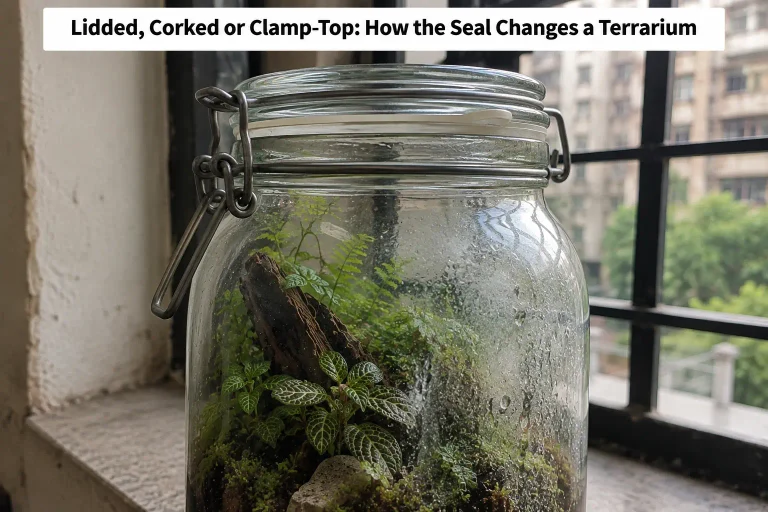
It does not need to be airtight. It needs to be tight enough for water to stay in, and the difference between those two things decides your whole build.

Opening the lid is not cheating and it is not free. Here are the four situations that justify it, the one that does not, and what you are actually resetting.
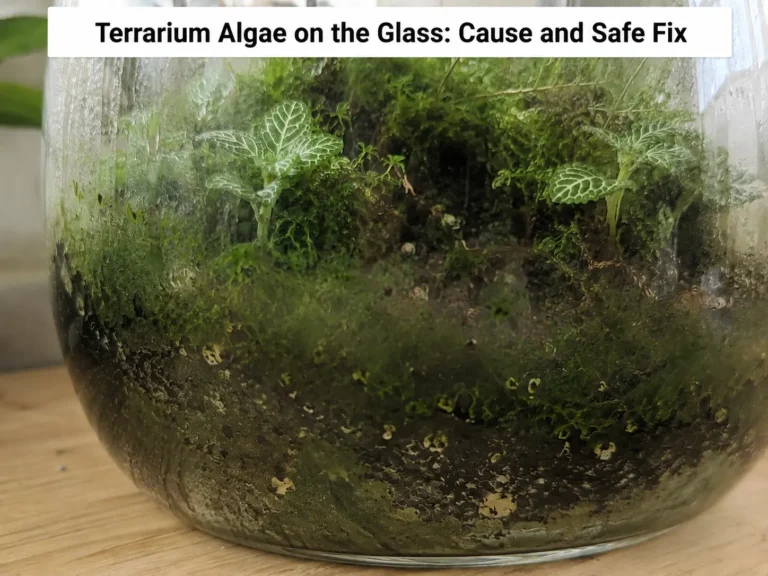
Green film on terrarium glass is usually harmless algae, not mold. Why it grows there, how to remove it safely, and what it’s telling you.

A cloudy terrarium haze that survives wiping is usually mineral film or true etching. Learn to tell them apart and what actually fixes each one.
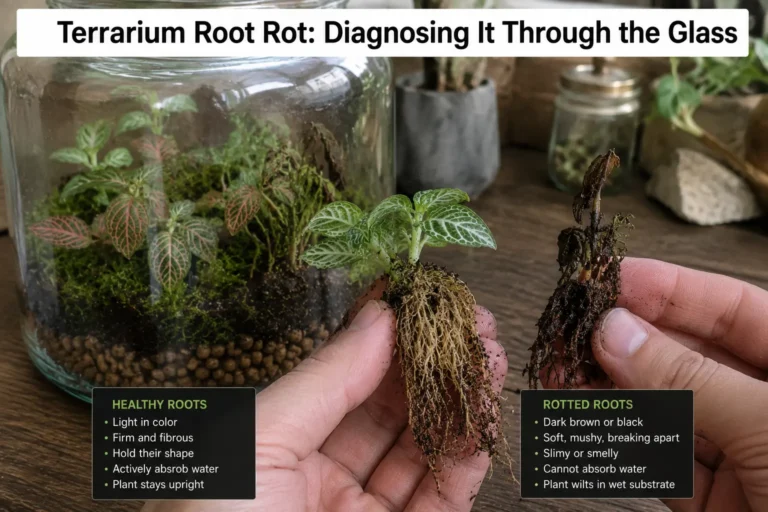
You do not want to dig the plant up to check. What terrarium root rot looks like from outside a sealed jar, which signs are reliable, and what to do next.
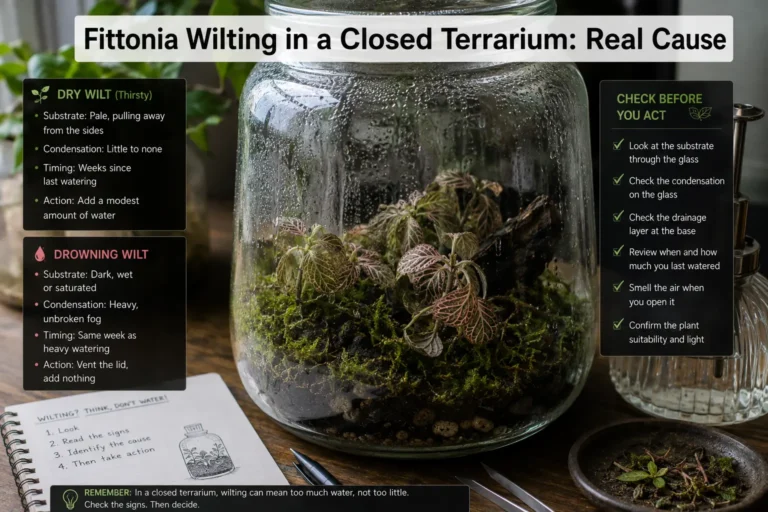
A wilting fittonia inside a sealed jar is not always thirsty. Learn the two different wilts, how to tell them apart through the glass, and what to do.
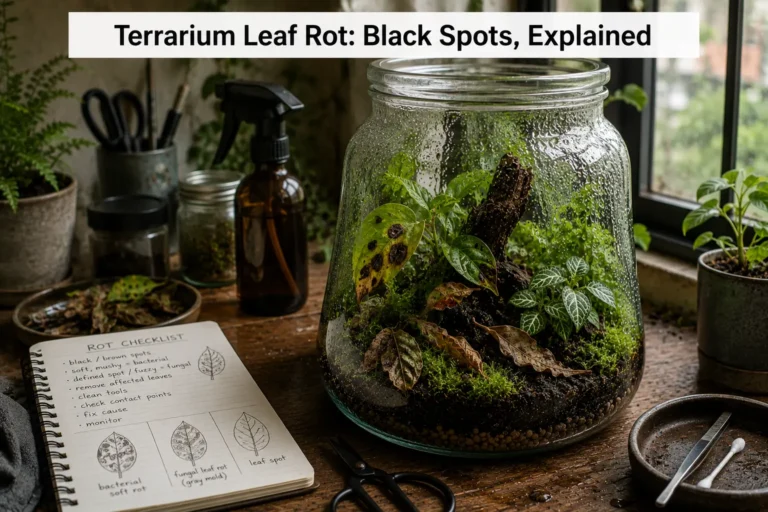
Black, soft, spreading spots on a terrarium leaf: bacterial or fungal rot, what caused it, and whether the plant or the build can be saved.
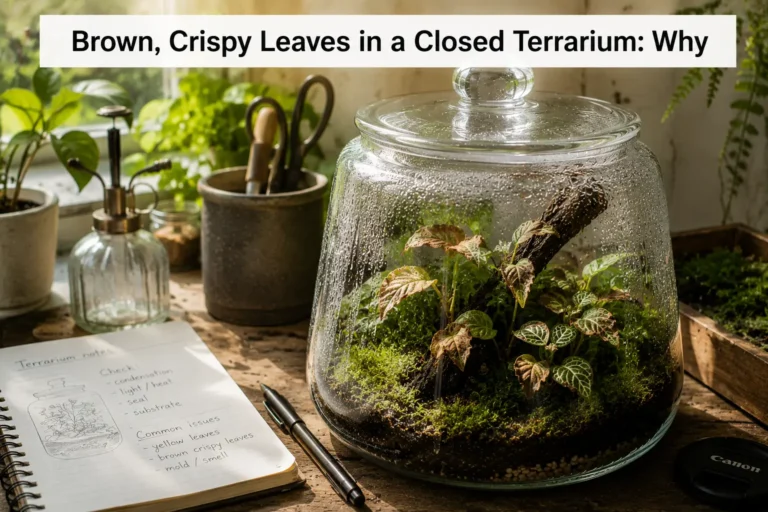
Crispy brown leaves inside a sealed, humid jar look like dryness but are usually heat. How to tell heat damage from a real seal leak.
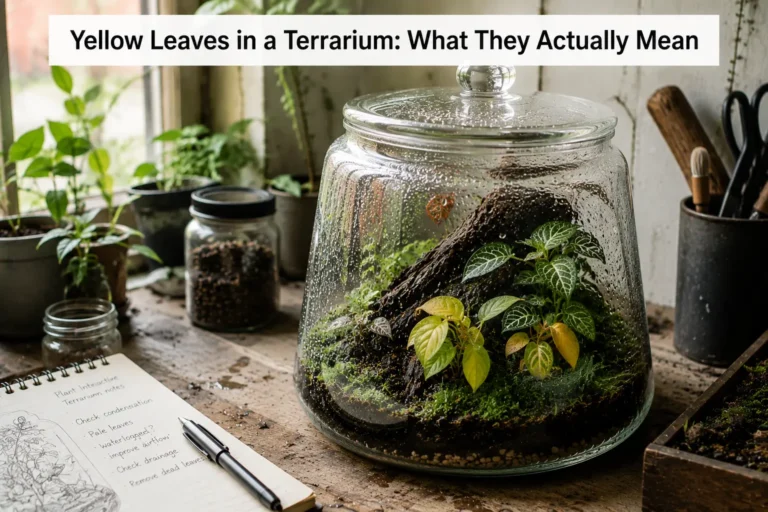
Yellowing inside a sealed jar is usually overwatering, but not always. Pair it with the condensation reading to tell the real causes apart.
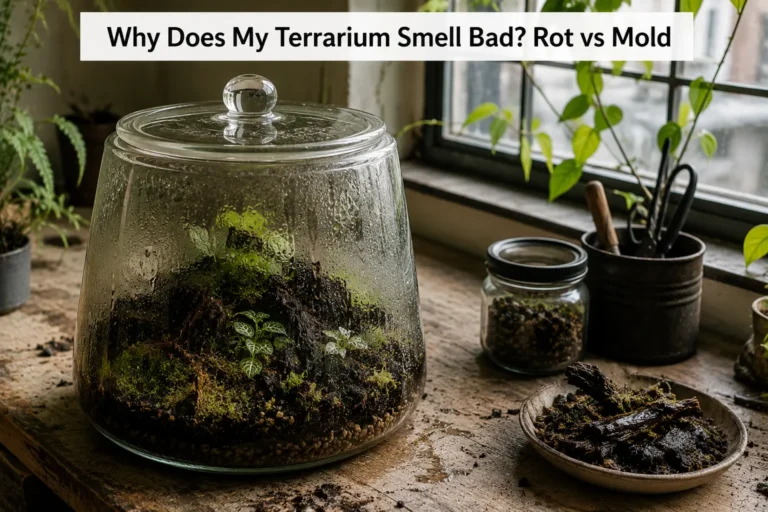
A musty smell and a sour, drain-like smell mean different things inside a closed jar. How to tell them apart and which one to act on first.