
Why Does My Terrarium Smell Bad? Rot vs Mold

A musty, earthy-but-off smell when you open the lid usually means surface mold or mildew feeding on decaying matter, and it is worth addressing but not urgent. A sour, sulfurous smell like a drain or rotten eggs means anaerobic decomposition in waterlogged substrate, oxygen-starved bacterial breakdown, and it is the one smell worth acting on the same day rather than watching. Both are different from a sweet, fermented smell, which usually points at a specific piece of plant matter breaking down somewhere you have not spotted it yet. Smell is the fastest diagnostic a closed terrarium offers, and it is worth checking on purpose rather than only noticing it by accident.
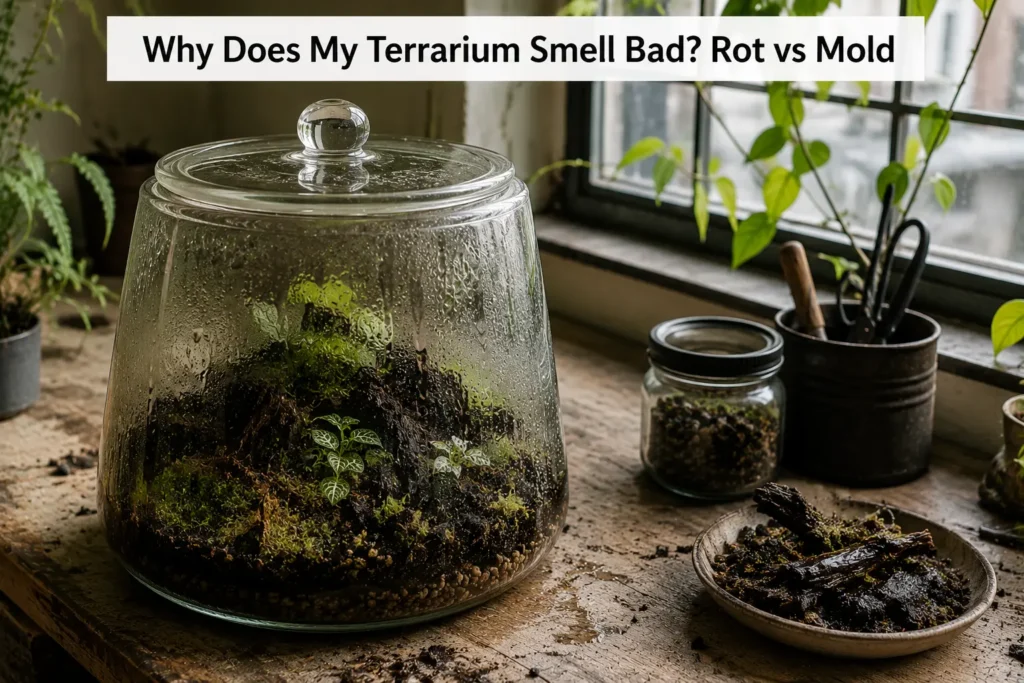
Why smell matters more than most guides suggest
Most terrarium troubleshooting starts with the glass or the leaves, because those are visible without opening anything. Smell gets mentioned last, if at all, even though it is arguably the single most informative piece of evidence available, and it takes about one second to check. Open the lid, take a normal breath near the opening (not a deep inhale directly into the jar), and note what you actually smell before doing anything else.
Do this once, briefly, rather than leaving the lid open to keep smelling it. Opening the jar changes the humidity and the condensation you would otherwise be reading, so treat a smell check as a quick, single observation, not an extended open-lid inspection. If you are unsure what you are smelling on the first try, close the lid, wait a minute for the air inside to settle, and check again rather than holding the lid open while you decide.
The three smells and what each one means
Earthy, like forest floor after rain: correct
This is what a healthy sealed terrarium is supposed to smell like. A closed jar is a small decomposition system running on purpose, with organic matter breaking down slowly in a moist, largely undisturbed environment, and that process has a characteristic smell that is not unpleasant. If this is what you are smelling, nothing here needs fixing regardless of what the glass or leaves look like.
Musty, mildewy, slightly sharp: mold or mildew
This smell most commonly accompanies visible fuzzy or web-like growth on the substrate surface, on dead leaf litter, or on hardscape, though it can be detectable slightly before the growth itself is obvious to the eye. It indicates fungal activity feeding on decaying organic matter in a moist environment, which is common in the first weeks of a new build and is generally not an emergency.
If this is the smell, check the substrate surface and any wood for visible growth, and see the mold identification guide to work out which kind of growth it is before deciding on a response.
Sour, sulfurous, like a drain or rotten eggs: anaerobic rot
This is the smell that warrants acting the same day rather than watching it. A sour or rotten-egg smell points at anaerobic decomposition: organic material breaking down without oxygen, most commonly in substrate that has been sitting waterlogged for a period of time, cutting oxygen off from the bacteria that would otherwise break material down cleanly. This is a step past ordinary mold and points at a substrate and drainage problem rather than a surface growth problem.
If this is the smell, check the too much condensation guide for the glass reading that usually accompanies it, and check the drainage layer for whether excess water actually has anywhere to go. Waterlogged substrate is the recurring cause behind this smell, and the fix is the same one that fixes persistent heavy condensation: stop watering, improve drainage if the layer is undersized, and give the system time to dry out toward a normal moisture level.
Sweet and fermented: something specific is decomposing
A sweeter, more fermented smell than either of the above usually means a specific, substantial piece of organic matter is breaking down, more than the system’s normal background decomposition accounts for. This is commonly a plant that has died and is decomposing somewhere not immediately visible, a large dropped leaf tucked behind hardscape, or a root that has rotted below the substrate surface.
If this is the smell, look through the visible layers for anything obviously dead or decomposing that has not been noticed yet, particularly behind or under hardscape pieces where visibility is limited. A small mirror or a phone camera angled into the gaps between hardscape and glass can help spot decomposing material without disturbing the rest of the build.
Reading the smell alongside what you can see
Smell alone narrows the cause; pairing it with the glass and the substrate narrows it further.
Sour smell plus heavy, unclearing condensation is close to a confirmed diagnosis of anaerobic waterlogging: both signals point the same direction, and the fix is the same for both.
Musty smell plus fuzzy growth visible on the substrate confirms ordinary surface mold rather than anaerobic rot; treat it with the lower urgency that category warrants.
Sour smell plus yellowing or collapsing leaves suggests the waterlogging has already progressed far enough to affect root health; see the yellow leaves guide for the water-related pattern that typically accompanies this combination.
No smell at all, or a faint neutral smell, paired with a glass and leaf appearance that otherwise looks normal, is a reasonable sign nothing significant is wrong, even if the terrarium is new enough that you are still uncertain what “normal” looks like for this particular build.
What not to do
Do not leave the lid open to air it out for hours over a smell alone, especially a sour one. A brief, targeted venting session is appropriate once the cause is identified (see the too much condensation guide for the specifics); leaving a sealed system open indefinitely undoes the humidity conditions the plants inside were selected for, without addressing why the smell appeared in the first place.
Do not assume a bad smell means the whole build has failed. Even a sour, anaerobic smell is frequently fixable by correcting drainage and moisture without a full rebuild, provided it is caught before the substrate has been waterlogged for an extended period and provided the plants have not already died back significantly.
Do not ignore a sour smell because the glass and leaves still look fine. Smell often precedes visible symptoms; substrate can be waterlogged and anaerobic before the leaves show any sign of it, which is exactly why checking smell on its own, rather than only in response to something visibly wrong, catches problems earlier.
FAQ
Is a bad smell from my terrarium harmful to breathe?
This guide does not make medical claims about what is safe to breathe. As a general precaution, avoid deeply inhaling directly into an opened jar, and anyone with respiratory sensitivities, asthma, or allergies should be cautious around any strong or moldy smell and consult their own doctor if concerned.
My terrarium smells earthy but not bad. Is that mold?
No. A neutral, earthy, forest-floor smell is the expected smell of a healthy closed system running its normal decomposition process. Mold and anaerobic rot both produce a smell that reads as distinctly off, not simply earthy.
How fast should I respond to a sour or rotten-egg smell?
Treat it as worth acting on within the day: stop watering, check the drainage layer through the glass for standing water reaching into the substrate, and vent the lid briefly. It is not usually an emergency requiring an immediate teardown, but it is the smell least worth waiting on.
Can I use anything to mask or neutralize a bad terrarium smell?
No product belongs inside a sealed terrarium for the purpose of masking a smell. The smell is diagnostic information about a real underlying condition, and masking it removes your ability to tell whether the actual cause has been fixed.
Why does my terrarium smell fine even though the glass looks foggy?
Condensation and smell are related but not the same measurement. A jar can run with more visible fog than average while still smelling neutral, particularly in a young build still finding its balance. Treat a neutral smell as a reassuring sign alongside the fog reading, not a reason to ignore the fog entirely.