Brown, Crispy Leaves in a Closed Terrarium: Why

Crispy brown leaves inside a sealed, humid jar look like dryness but are usually heat. How to tell heat damage from a real seal leak.

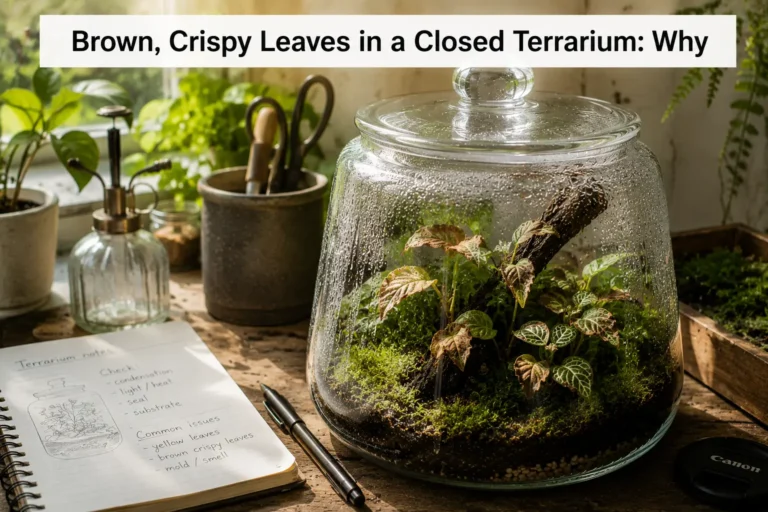
Crispy brown leaves inside a sealed, humid jar look like dryness but are usually heat. How to tell heat damage from a real seal leak.
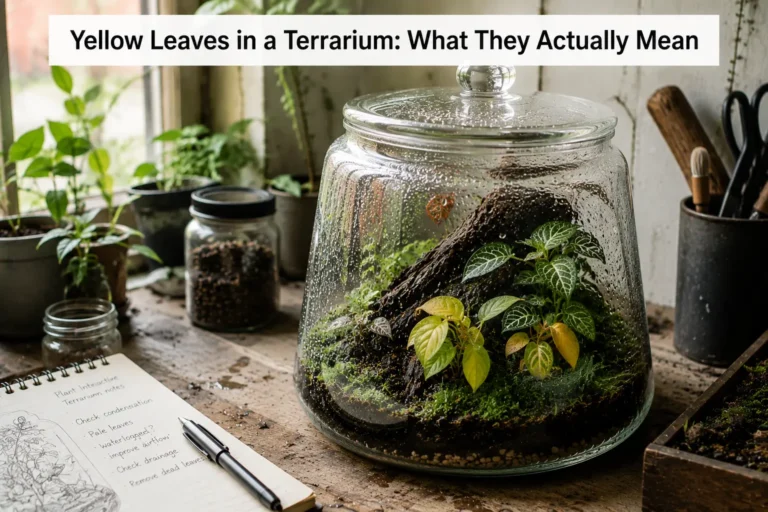
Yellowing inside a sealed jar is usually overwatering, but not always. Pair it with the condensation reading to tell the real causes apart.
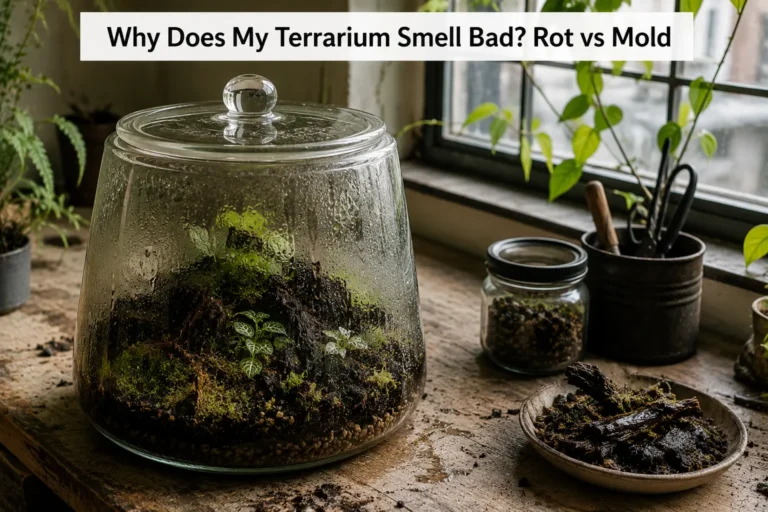
A musty smell and a sour, drain-like smell mean different things inside a closed jar. How to tell them apart and which one to act on first.
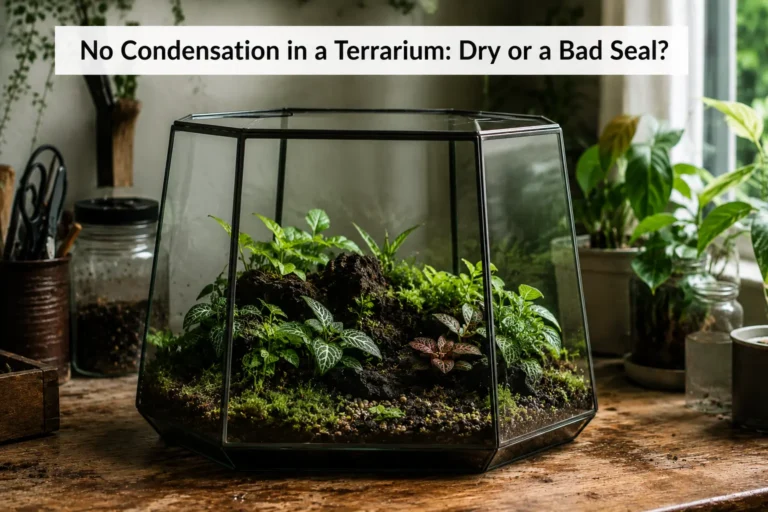
Days without any fog on the glass means one of two things: a leaking seal or a genuinely dry build. A simple test tells you which.
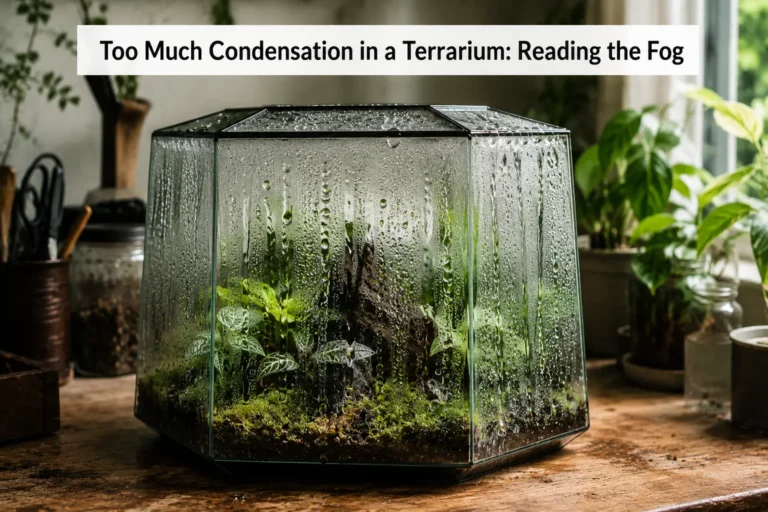
Heavy fog that never clears means too much water in the system. How to read it, what caused it, and how to fix it without overcorrecting.
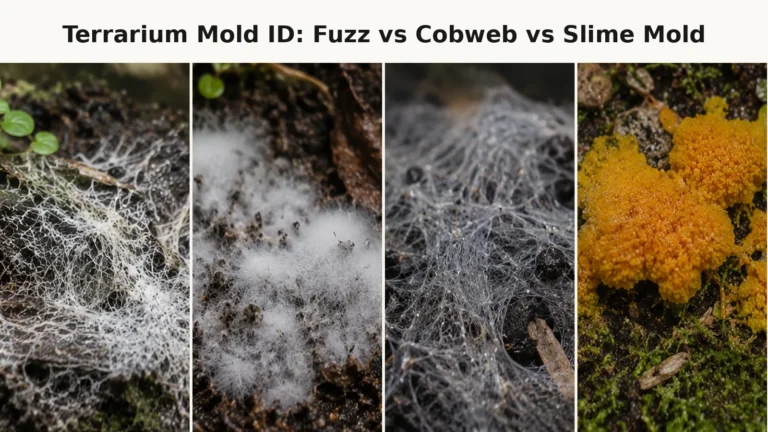
Tell fuzzy mold, cobweb mold, slime mold and harmless mycelium apart by growth pattern and behavior, not a guess from one photo.
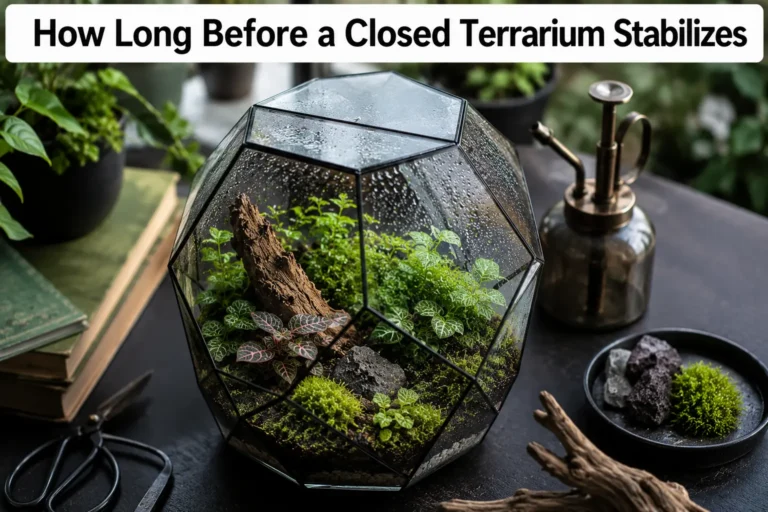
Two weeks or two months? Both, because they are different milestones. What stabilized actually looks like and the three variables that set your timeline.
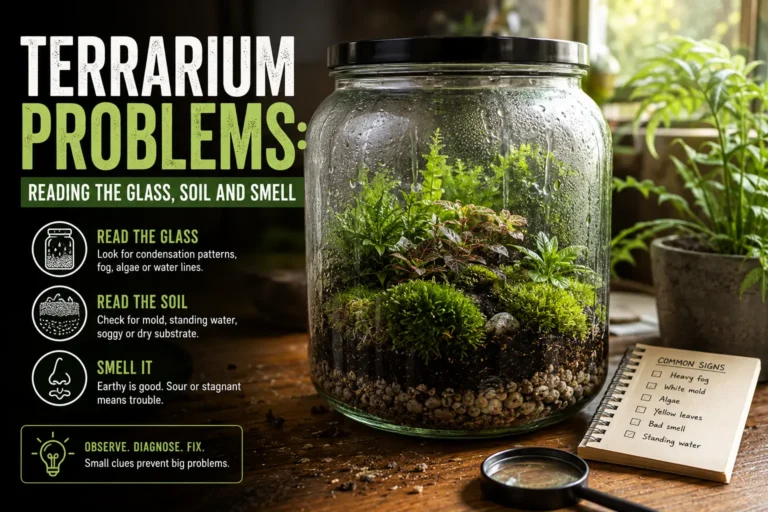
Something is wrong and you cannot name it. Diagnose a closed terrarium from what you can actually see and smell, then trace it to the build step behind it.
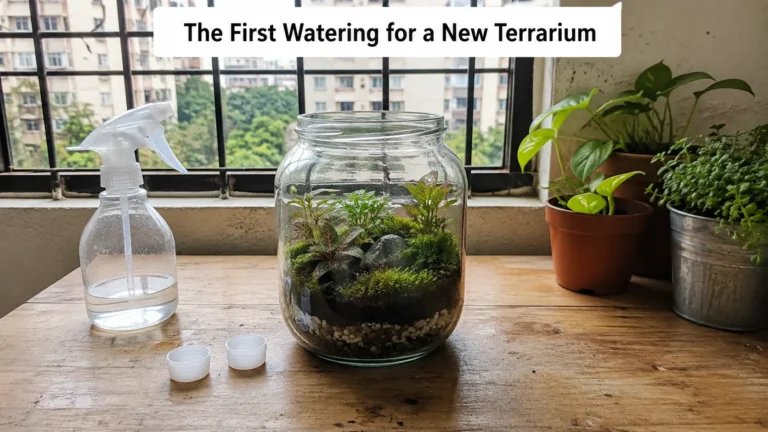
How much is a light mist, really? A concrete, checkable test for the first watering of a closed terrarium, plus the fix if you already poured too much.
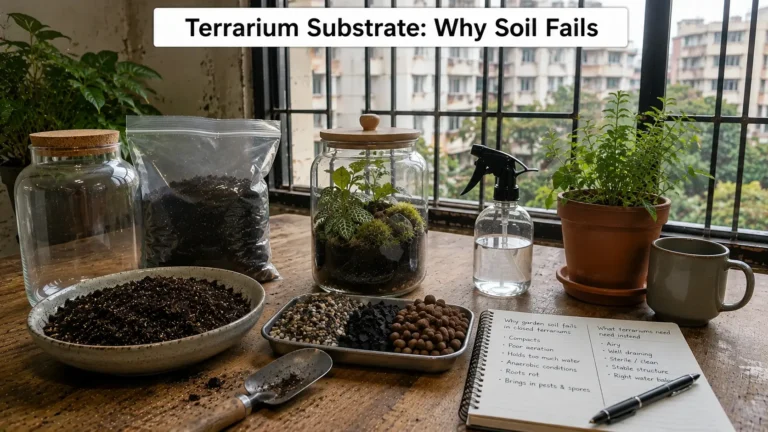
Can you use soil from a balcony pot in a closed terrarium? No, and here is exactly why, plus a budget-friendly mix that holds up in a sealed jar.