
Terrarium Glass Safety: Falls, Breaks and Spilled Soil

Terrarium glass safety comes down to three things: stop the jar falling, know how to clean up if it does break, and treat the spilled substrate as part of the hazard, not just a mess. For most homes the plants are not the main risk. A heavy glass jar knocked off a shelf, sharp fragments mixed into wet soil, dusty potting mix, and glass left in strong sun are the hazards that actually reach a child, a pet or the person cleaning up. Each one has a simple fix, and none of them needs special equipment.
This guide goes through them in the order they tend to happen: before anything breaks, the moment it breaks, the cleanup, and the quieter risks that have nothing to do with dropping the jar at all.
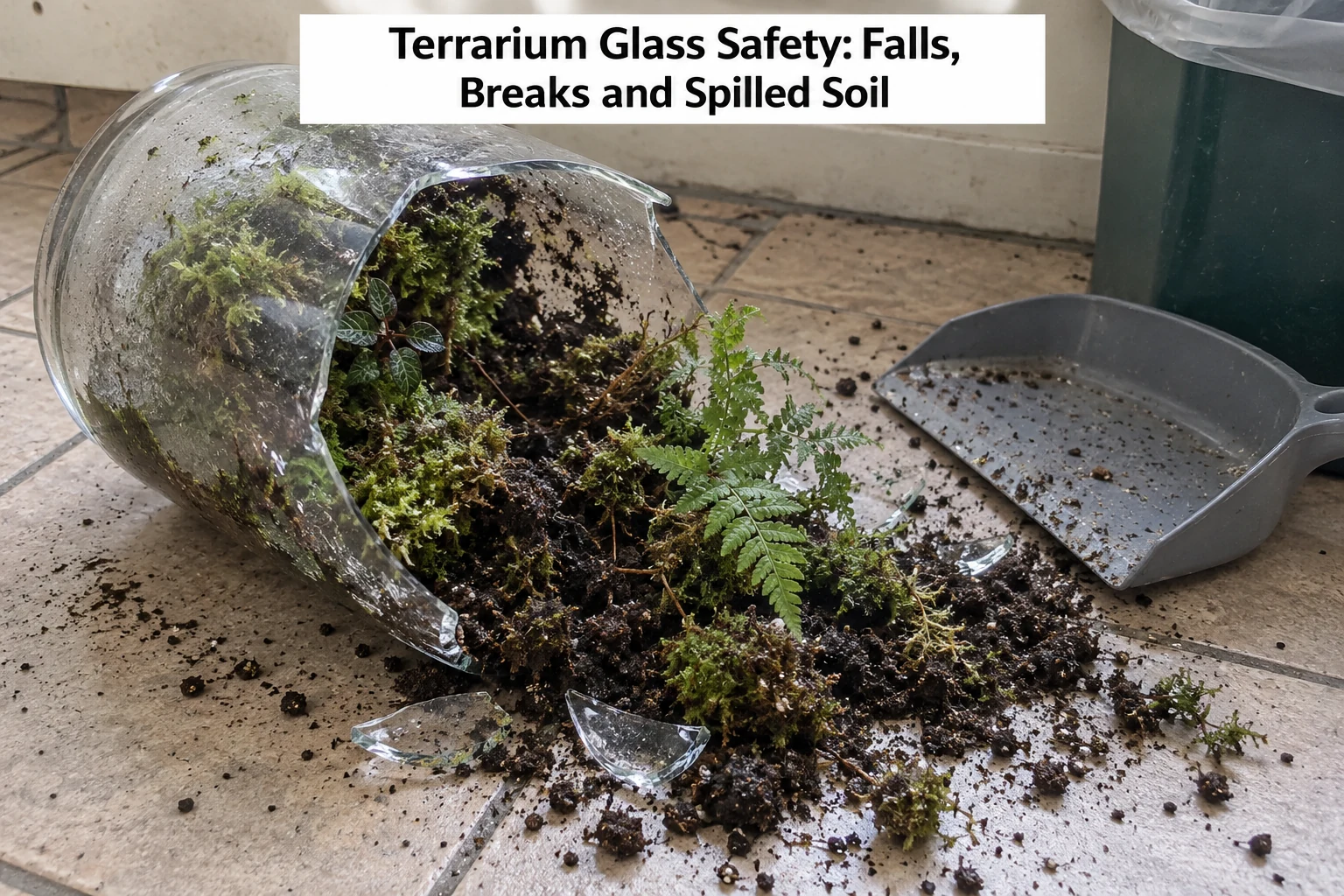
“If a terrarium breaks, I would treat the spilled soil as part of the glass hazard rather than material to save. Small fragments can disappear among moss, gravel and wet roots, so rescuing the planting comes after securing and clearing the area. For prevention, I pay as much attention to the shelf and its stability as to the thickness of the jar.”
Why the Glass Worries People More Than the Plants
If you share a home with a toddler or a cat, it is natural to look up plant toxicity first. That question matters, and we cover plant choice elsewhere on this site. But a closed terrarium is also a heavy glass container full of wet soil, gravel and sometimes decorative stones. When it goes wrong, it goes wrong all at once: glass, water and substrate on the floor together.
The honest ranking for most households looks like this:
| Hazard | When it happens | What reduces it most |
|---|---|---|
| Jar knocked or pulled off a surface | Any day, usually during play or a jump | Placement: deep, stable, out of reach |
| Glass fragments in a spill | Only after a break | A slow, methodical cleanup with people and pets out of the room |
| Dust from bagged potting mix | During building or cleanup | Wetting the mix, a mask, washing hands |
| Small loose items (stones, figurines) | When the jar is open or broken | Keeping decor inside a closed jar, out of reach |
| Glass focusing sunlight | Sunny windowsills, low winter sun | Keeping glass out of direct sun near anything that burns |
| Glass cracking from heat | When sterilizing with hot water | Warming the glass gradually, never pouring boiling water into cold glass |
The first row is the one to solve first, because everything below it depends on whether the jar stays where you put it.
Terrarium Glass Safety Starts With Where the Jar Sits
Most breaks are not accidents with the glass itself. They are accidents with where the glass was.
Surfaces that invite a fall
- Shelf edges. A jar near the front of a shelf only needs a nudge. Push it well back so a passing hand, tail or jump does not reach it.
- Low tables in a toddler’s path. Coffee tables and side tables sit at exactly the height a small child pulls themselves up on.
- Windowsills. They are narrow, often next to curtains a child or cat can pull, and they bring their own sun problem (covered below).
- Tall, light shelving. A shelving unit that can tip takes the terrarium with it. If your furniture came with an anti-tip fitting, it is worth using. Fitting one usually means drilling into a wall, so check for hidden wiring and pipes first, and if you are not confident, have a handyperson do it.
Surfaces that hold
- A deep, solid shelf where the jar can sit well back from the edge.
- A closed glass-front cabinet, which keeps the jar visible and lit but out of reach.
- A room that children and pets do not use unsupervised.
Container shape matters too. A squat, heavy jar with a wide base is harder to tip than a tall, narrow vase. If you are still choosing a container for a house with small children, our comparison of glass and plastic terrarium containers sets out what you gain and lose by avoiding glass altogether. Clear plastic does not shatter into sharp fragments, which is a genuine safety advantage in a toddler’s reach, even if it scratches and clouds sooner.
If the Jar Breaks: The First Five Minutes
A broken terrarium is not an emergency unless someone is hurt. Slow down; most cuts at this stage come from rushing.
- Check for injuries first. If anyone is cut, that comes before the floor. For anything beyond a minor scrape, or if glass may be in the wound, contact a doctor or urgent care. If a pet was near the break and may be cut or may have swallowed anything, contact your veterinarian.
- Get children and pets out of the room and close the door if you can. A cat walking through wet soil and glass carries fragments on its paws to the rest of the house.
- Put shoes on before you step anywhere near the spill. Fragments travel further than they look, especially on hard floors.
- Improve the light. Turn on overhead lights and, if you have one, use a flashlight held low to the floor. Glass shows up as glints when light hits it at a shallow angle.
- Do not grab for the plants. They can wait ten minutes. Reaching into a pile of wet soil for a fern is how hands get cut.
Cleaning Up Glass Mixed Into Wet Substrate
This is the part generic “how to clean up broken glass” advice does not cover. In a terrarium break, the glass is not lying on a clean floor. It is buried in damp soil, gravel, moss and charcoal, where you cannot see it.
Treat the whole spill as contaminated
Assume every handful of substrate contains glass. Do not try to sort the soil from the fragments with your fingers, and do not plan to reuse that substrate. It is cheap to replace and impossible to guarantee clean.
Work from the outside in
- Wear sturdy gloves. Ordinary rubber kitchen gloves are not cut-resistant, so thick gardening or work gloves are better.
- Pick up the large, obvious pieces of glass first and place them straight into a rigid container, such as a cardboard box or a plastic tub with a lid, not a thin bin bag that a shard can pierce.
- Scoop the soil and gravel with a dustpan or a piece of stiff card, working from the edges of the spill toward the center so you do not spread it.
- Wipe the area afterward with damp paper towels, folding each one inward after use. Damp paper picks up fine fragments that a brush pushes around.
- Check the area again with the low flashlight before letting anyone back in, including under nearby furniture.
Rescuing the plants
Once the floor is clear, the plants can be lifted by their foliage and stems rather than by the root ball, since the root ball may have glass in it. Gently shake or rinse the roots over a container before handling them further. Our guide to deciding when to restart a terrarium helps if you are weighing a full rebuild against starting over with fewer plants.
Disposal
Seal the rigid container and mark it as broken glass so the next person to handle it knows. Disposal rules for glass and soil differ between cities, so check what your local waste service asks for.
Spilled Substrate Is a Hazard in Its Own Right
Even without a break, terrarium substrate deserves more respect than it usually gets.
Potting mix dust
Bagged potting mix can carry bacteria that cause lung infections when the dust is breathed in. NSW Health in Australia, in its November 2022 gardening safety advice (read on 2026-09-28), states that Legionella longbeachae “is often found in potting mix” and can cause Legionnaires’ disease “if someone inhales dust from contaminated soil.” Its advice is to put on a face mask and gardening gloves before opening the bag, to wet the potting mix first so the dust does not blow up, to wash your hands with soap before eating or drinking, and to follow the manufacturer’s warnings on the bag.
That advice fits terrarium work well, because building a jar and cleaning up a spill both involve handling mix at close range, often indoors. It also argues for doing substrate work away from where children play and pets sleep. If you sterilize substrate before use, our guide to sterilizing terrarium substrate and the jar covers the process; sterilizing is about plant health, and it does not replace the dust and hand-washing precautions above.
Small loose pieces
Decorative pebbles, glass beads, tiny figurines and loose gravel are all small objects. Inside a closed jar on a high shelf they are decoration. Once the jar is open on a low table, or scattered across the floor after a break, they are things a toddler or a puppy can put in their mouth. Keep decorated jars closed and out of reach, and count the loose decor back in after a cleanup if you can.
If a child or pet does swallow anything from a terrarium, including soil, charcoal, a stone or a plant, do not wait to see what happens. Contact poison control or a doctor for a child, and your veterinarian or an animal poison line for a pet.
The Hazards That Have Nothing to Do With Dropping It
Glass that focuses sunlight
A round, water-filled or curved glass object in direct sun can act like a lens. Fire services in the UK warn about this regularly. Essex County Fire and Rescue Service, reporting a bedroom fire on 7 January 2025 (read on 2026-09-28), described how “the sunlight came through the window, reflected off the glass and set fire to the curtains,” and advised: “Make sure mirrors or glass or crystal objects on your window sills, dressing tables or anywhere else in your home are out of direct sunlight.” You can read the Essex fire incident report in full.
Globe terrariums, fishbowl-style jars and rounded bottles are exactly the shapes to think about here. Keeping terrariums off sunny sills and away from curtains is already good practice for the plants, which tend to overheat in direct sun behind glass, so the fire advice and the plant advice point the same way.
Glass that cracks from heat
Many builders sterilize jars with hot water. Pouring boiling water into a cold glass jar risks a sudden crack, which turns a cleaning step into a cleanup of hot water and broken glass. Warm the glass gradually, or use a method that does not rely on thermal shock, and never hold the jar against your body while filling it with hot water.
Glass on the move
Carrying a full terrarium is when a lot of breaks happen: wet glass is slippery, and a planted jar is heavier than it looks. Carry it with two hands under the base, never by the rim or the lid. If you are relocating, our guide to moving a terrarium goes through packing and transport in detail.
What No Amount of Care Fully Removes
It is worth being straight about the limits. A lid keeps small hands and paws out of the plants, but it does not stop the jar falling. A heavy jar is harder to tip, but it does more damage when it does fall. A cabinet solves access, but the jar still has to be moved to be cleaned or pruned, and that is when it is most exposed.
In a house with a young child or an animal that climbs, the only arrangement that removes the glass hazard completely is a container that is not glass, or a jar that lives somewhere they cannot go. Everything else reduces the odds rather than eliminating them, and that is fine as long as you know which one you have chosen.
Frequently Asked Questions
Is a glass terrarium safe with a toddler in the house?
It can be, if the jar is genuinely out of reach: pushed well back on a deep, stable shelf or inside a closed cabinet. The main risk is the jar being pulled down or knocked over, not the glass itself. For a jar within a toddler’s reach, a clear plastic container avoids sharp fragments.
How do I clean up a broken terrarium safely?
Move children and pets out of the room, put on shoes and sturdy gloves, and pick up large glass pieces into a rigid container. Treat all the spilled soil as if it contains glass, scoop it rather than sorting it by hand, then wipe the floor with damp paper towels and check with a low flashlight.
Can I reuse the soil from a broken terrarium?
It is safer not to. Glass fragments hide in damp substrate and cannot be reliably picked out. Replace the substrate and rinse the plant roots over a container before replanting.
Can a glass terrarium start a fire in the sun?
Curved or round glass in direct sunlight can focus light, and UK fire services have recorded fires started this way. Essex County Fire and Rescue Service advises keeping glass objects on windowsills out of direct sunlight. Keeping terrariums out of direct sun also protects the plants from overheating.
Is terrarium potting mix dangerous to handle?
Bagged potting mix can carry Legionella bacteria. NSW Health advises wearing a mask and gloves before opening the bag, wetting the mix to keep dust down, and washing your hands with soap before eating or drinking.