
Collecting Springtails From the Wild: A Safe Method

Collecting springtails from the wild is possible and costs nothing, but you should never move wild leaf litter or soil straight into a planted terrarium. Springtails live in damp leaf litter, compost and shady soil, so they are easy to find. The risk is everything that lives alongside them: mites, fungus gnat larvae, slugs, predators and fungal spores. The safe method is to separate the springtails from the litter, keep them in a separate quarantine container, watch what emerges, and only then add a clean starter population to your jar.
This guide covers where springtails live, the two main ways to pull them out of litter, the safety points that matter with each, how to quarantine a wild catch, and the rules to check before you collect anywhere.
“I would keep a wild springtail catch separate from a planted jar until I can see what else came with it. A simple, easy-to-inspect culture makes unwanted larvae or mites easier to notice than a handful of forest litter does. Quarantine reduces the risk rather than proving a culture is sterile, and keeping a clean starter aside also gives the terrarium a backup supply.”
Why Bother Collecting Springtails From the Wild?
In many places, shops that sell live terrarium springtails simply do not exist. If you live somewhere without a reptile or terrarium supplier, or where shipping live animals is unreliable, the wild is the only source. Wild collection also appeals to people who like the idea of a crew drawn from their own local soil.
The trade-off is control. A shop culture is usually one known species, raised in a clean medium. A wild catch is a sample of whatever happened to be in that patch of ground. That sample might be perfect, or it might contain animals you never want in a sealed jar.
Where Wild Springtails Live
Springtails are among the most common animals in soil. Texas A&M AgriLife Extension’s springtails page (read on 2026-09-27) says they “live in leaf litter, compost piles and lawn soils” and thrive in “shady areas rich in decaying leaves and humus.” It lists their food as “bacteria, fungi, lichens, algae and decaying vegetation.”
Good places to look include:
- Damp leaf litter under trees and shrubs, especially the layer where leaves are starting to break down.
- Under stones, bricks and pots that sit on moist ground.
- Rotting wood on the ground.
- Compost heaps, particularly the cooler outer edges.
- The soil of potted plants kept damp on a balcony or in a courtyard.
Lift a leaf or a stone and watch for tiny specks that jump away when disturbed. Not all springtails are white. Many surface-living kinds are gray, brown or mottled and are easy to miss until they move.
An Important Difference: Wild Springtails Are Not All the Same
This is the part most wild-collection guides skip. The springtails sold for terrariums are usually a single hardy species chosen because it eats decay and fungus and leaves plants alone. A wild catch can contain several species, and they do not all behave the same way.
The same Texas A&M page notes that while most springtails eat decaying matter and fungi, “some species eat plant roots or nibble on tender young plants.” In a garden, that barely matters. In a small closed jar full of fresh moss and new shoots, it can. This is one more reason to watch a wild culture for a while before trusting it near your plants.
Two Ways to Separate Springtails From Leaf Litter
Scooping up a handful of litter and dropping it in your terrarium is the method to avoid. Instead, you want to pull the springtails out and leave the litter, and most of its hitchhikers, behind.
Method 1: The bait trap
This is the gentler and safer method for most people.
- Take a small, clean plastic container with a lid.
- Put a damp paper towel or a layer of damp, clean substrate in the bottom.
- Add a small piece of bait. Keepers commonly use a slice of mushroom, potato or sweet potato.
- Set the open container on the ground in a spot where you saw springtails, and lightly cover it with leaf litter so it stays shaded and damp.
- Check it after a few days. Springtails gather on the bait and the damp surface.
- Tap the bait over a fresh quarantine container to shake the springtails off, leaving as much debris behind as possible.
The advantage is selectivity. You are attracting animals to a clean container rather than carrying the whole litter community home.
Method 2: The heat funnel
Texas A&M AgriLife describes a simple funnel: “Replace the bottom of a coffee can or plastic jar with ¼-inch hardware cloth (screen),” fill it with the material to sift, set a container underneath, and “place a lamp or other low-heat source above the can.” As the extension explains, “heat from the light bulb will dry the leaf litter from the top, driving springtails and other small invertebrates through the screen at the bottom.”
Two cautions matter here:
- You catch far more than springtails. The funnel drives out every small animal that flees drying, including mites, larvae, tiny spiders and beetles. You will need to pick springtails out of the catch, which is fiddly without magnification.
- A lamp over dry leaves is a fire risk. Use only a low-heat source, as the extension specifies, keep the lamp from touching the litter or the container, keep it away from water and cables, and never leave the setup running unattended or overnight. If you are not confident arranging a lamp safely, use the bait trap instead.
Quarantine: The Step That Keeps Your Jar Safe
Whatever method you use, the springtails should go into a separate quarantine culture, not into a planted terrarium.
A simple quarantine setup:
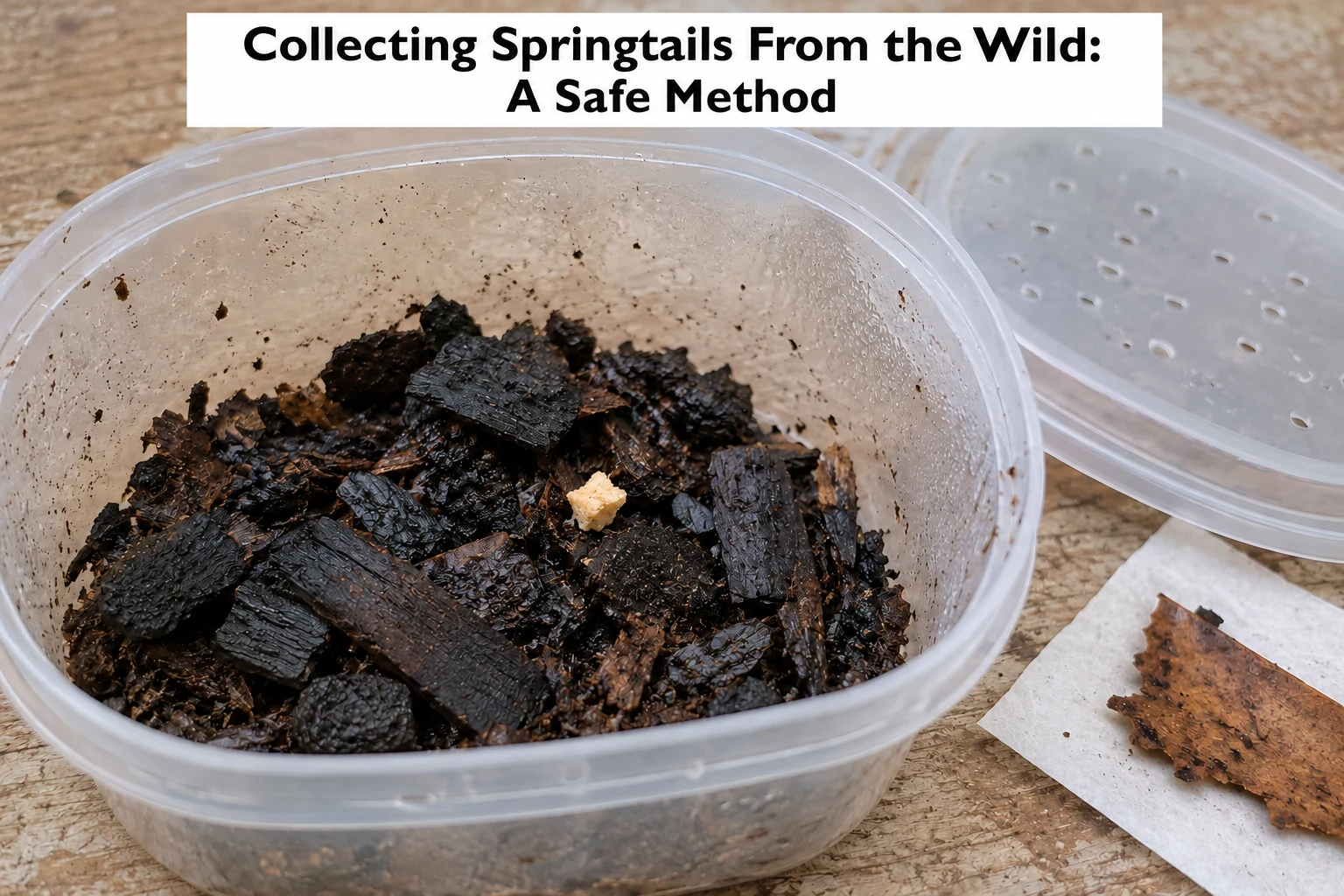
- A small clear plastic container with a lid and a few pinholes for air.
- A damp base that is easy to see through and hard for pests to hide in. Keepers commonly use damp charcoal pieces, clay pebbles or a thin layer of clean, sterilized substrate.
- A tiny amount of food, such as a pinch of dry yeast or a small piece of vegetable, replaced before it goes moldy.
Then watch. Over the following weeks, look for:
- Mites. Tiny, slow-moving, often reddish, tan or white dots that walk rather than jump. Mites are one of the most common contaminants in wild cultures.
- Fungus gnats. Small dark flies around the container, or thin clear larvae in the substrate. See our guide to fungus gnats in a terrarium for why these are so hard to remove once established.
- Slugs, snails or their eggs. Clusters of tiny clear spheres, or silvery trails.
- Predators. Small centipedes, spiders or predatory beetles that will eat the springtails.
- Heavy mold growth that the springtails are not keeping up with.
If you see pests, start again. Pick a few clean-looking springtails out with a fine paintbrush and move them to a fresh container. It can take more than one round to get a clean line. Once a culture has been stable and clean for a while, take a small scoop of springtails, not the whole culture medium, and add them to your terrarium.
Keeping a separate culture going has another benefit: you always have a backup supply if the population in the jar crashes.
Protecting the Terrarium Itself
A quarantine culture protects the jar from animals. The substrate and hardscape need their own protection. If you are also collecting leaf litter, wood or moss from outdoors to use in the build, treat it separately and do not assume it is clean just because the springtails were. Our guide to sterilizing terrarium substrate and the jar covers the options and their safety points.
Keep in mind that heat-treating material kills everything in it, including springtails. You either use a batch of litter as a springtail source or as a clean decoration, not both.
Do Not Move Soil Around Carelessly
Small animals in soil are not only a risk to your terrarium. Moving soil, compost and leaf litter between places is one of the ways invasive species spread. The University of Maryland Extension’s page on invasive jumping worms (updated October 17, 2024, read on 2026-09-27) explains that these worms spread “by way of mulches, compost, and potted plants; in soil on tools, equipment, and shoes,” most likely “in the cocoon stage which is difficult to detect.” Its prevention advice includes keeping fallen leaves on your own property for compost and mulch.
The same principle applies to springtail collecting:
- Collect close to home. Your own garden, balcony pots or a nearby shared green space is better than carrying litter from a distant forest or another region.
- Take only what you need. A small bait trap needs no litter removal at all.
- Dispose of spent litter carefully. Return it to the place you took it from, or bag it with household waste, rather than dumping it somewhere new.
- Clean your shoes and tools after collecting.
Check the Rules Before You Collect
Many national parks, nature reserves, botanical gardens and protected forests prohibit removing any plants, animals, soil or leaf litter, even tiny amounts. Private land needs the owner’s permission. Rules differ by country and by site, so check the signs or the managing authority before collecting anywhere other than your own property. When in doubt, use your own garden or potted plants.
Personal Safety When Collecting
Leaf litter and the undersides of stones and logs also shelter animals you do not want to put your hand near. Depending on where you live, that can include stinging insects, spiders, scorpions, centipedes and snakes.
- Wear gloves.
- Turn stones and logs toward you so anything underneath moves away from you.
- Do not reach blindly into litter or crevices.
- Wash your hands after handling soil and litter.
Frequently Asked Questions
Is collecting springtails from the wild safe for my terrarium?
It can be, if you separate the springtails from the litter and keep them in a separate quarantine culture first. Adding wild litter or soil directly to a planted jar risks bringing in mites, fungus gnats, slugs and predators along with the springtails.
Where is the easiest place to find wild springtails?
Texas A&M AgriLife Extension notes they live in leaf litter, compost piles and lawn soils, and thrive in shady spots rich in decaying leaves. Lifting damp leaves, stones or pots on moist ground is usually the quickest way to spot them.
Can wild springtails damage my plants?
Most eat fungi and decaying matter, but Texas A&M AgriLife notes that some species eat plant roots or nibble on tender young plants. A wild catch may contain more than one species, which is why watching a quarantine culture before adding it to a jar makes sense.
How do I tell springtails from mites?
Springtails jump when disturbed, using a forked appendage at the rear of the body. Mites walk and do not jump. If you see small dots crawling slowly rather than springing away, they are probably mites.
Can I just use wild leaf litter in my terrarium to bring springtails in?
It is the riskiest way to do it. Wild litter carries the whole community that lives in it. If you want to use litter as decoration, treat it first. If you want springtails, trap them out of the litter and quarantine them separately.