Terrarium Root Rot: Diagnosing It Through the Glass

You do not want to dig the plant up to check. What terrarium root rot looks like from outside a sealed jar, which signs are reliable, and what to do next.

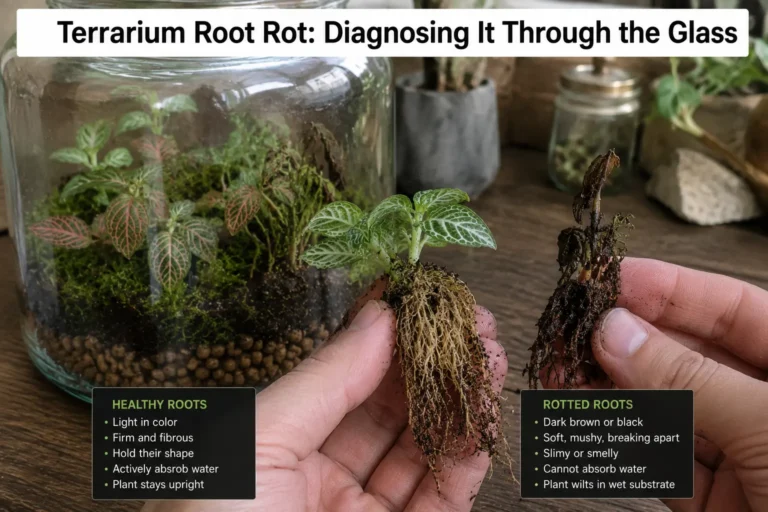
You do not want to dig the plant up to check. What terrarium root rot looks like from outside a sealed jar, which signs are reliable, and what to do next.
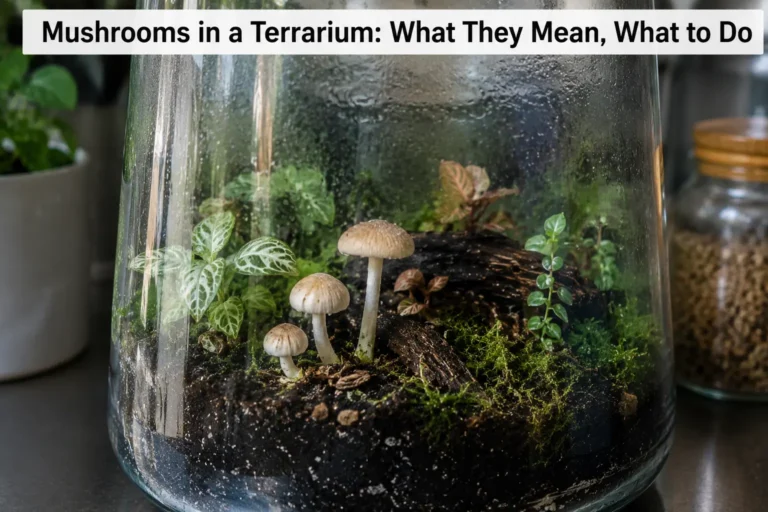
Mushrooms in a terrarium signal decomposition, not disaster. What they say about your moisture, how to remove them safely, and the child and pet risk.
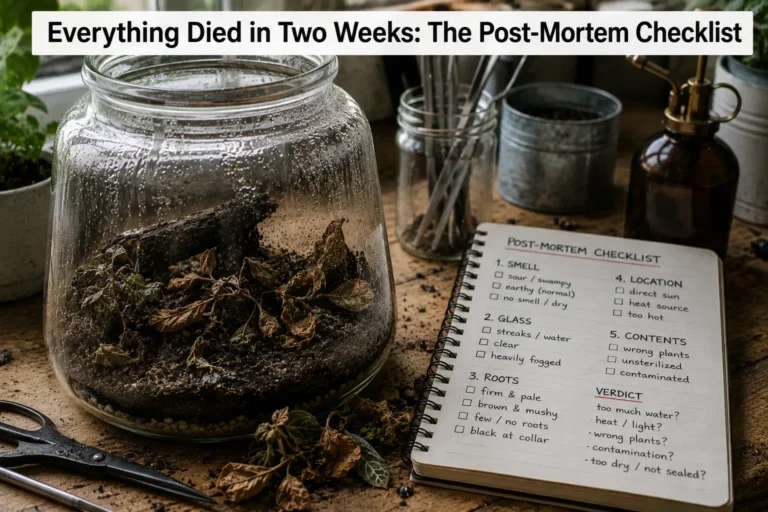
When the whole build is gone, stop trying to save it and read it instead. Five things the dead terrarium tells you before you start the next one.
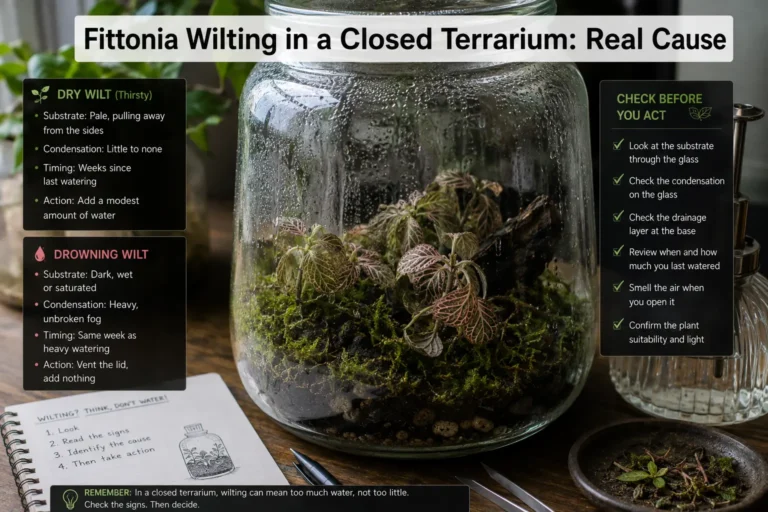
A wilting fittonia inside a sealed jar is not always thirsty. Learn the two different wilts, how to tell them apart through the glass, and what to do.
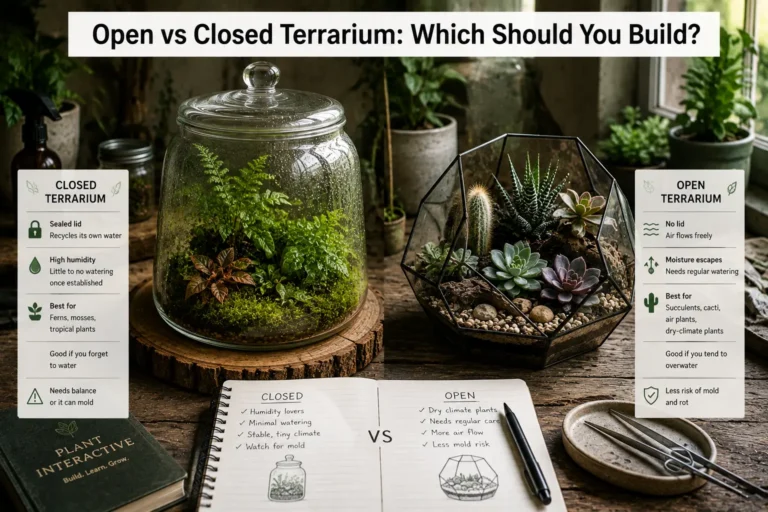
Open vs closed terrarium, explained by a hobbyist who has built 25+. Learn the real difference, which suits your plants and climate, and which to pick.
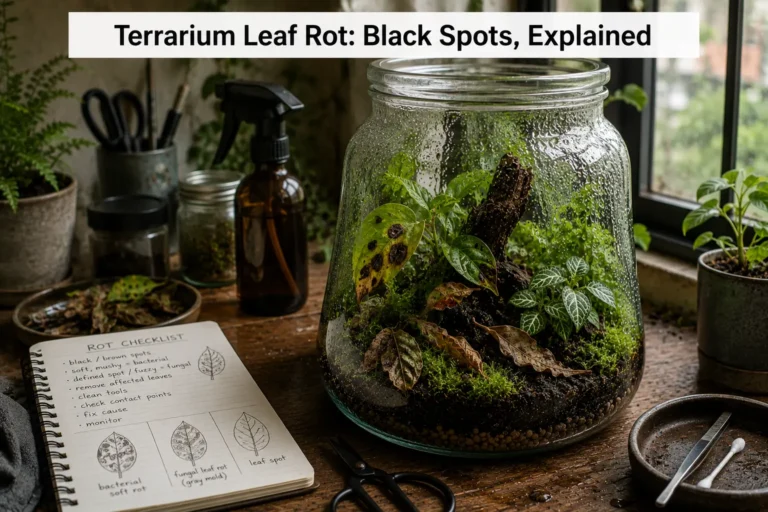
Black, soft, spreading spots on a terrarium leaf: bacterial or fungal rot, what caused it, and whether the plant or the build can be saved.
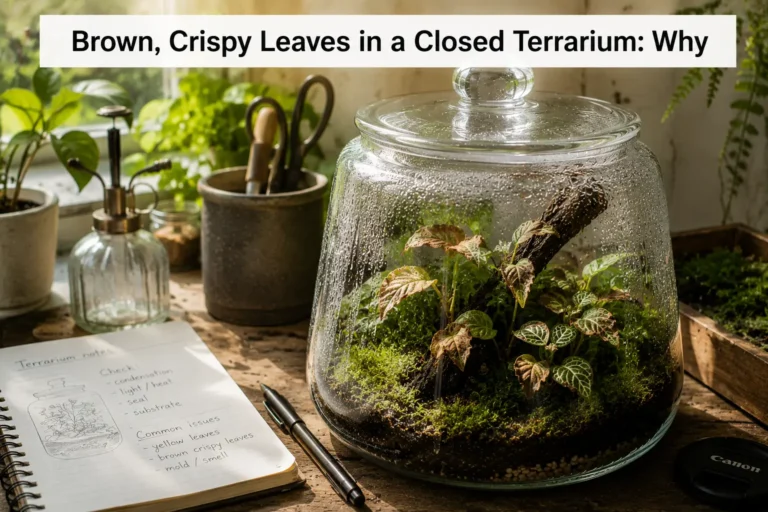
Crispy brown leaves inside a sealed, humid jar look like dryness but are usually heat. How to tell heat damage from a real seal leak.
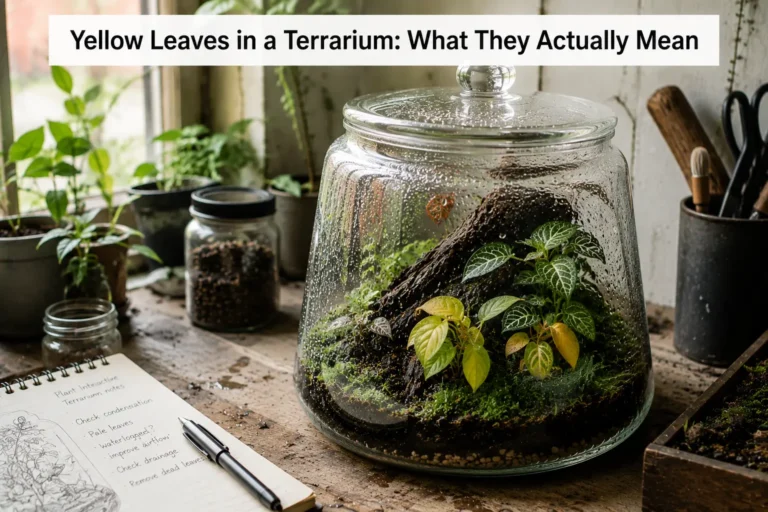
Yellowing inside a sealed jar is usually overwatering, but not always. Pair it with the condensation reading to tell the real causes apart.
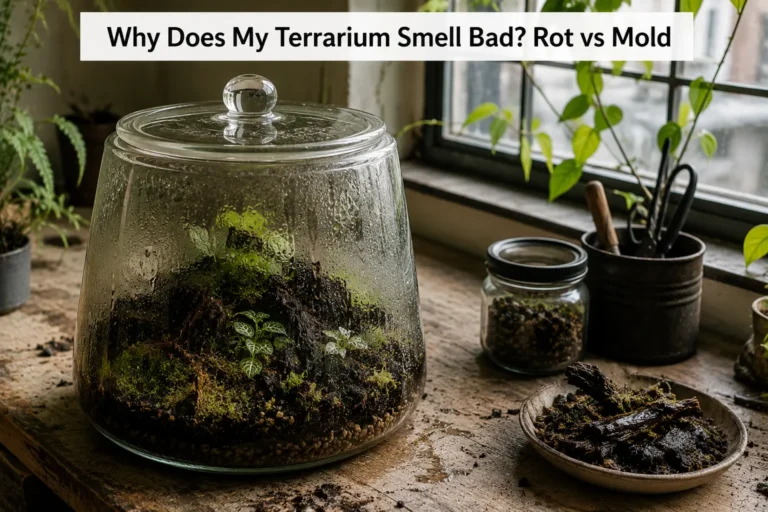
A musty smell and a sour, drain-like smell mean different things inside a closed jar. How to tell them apart and which one to act on first.
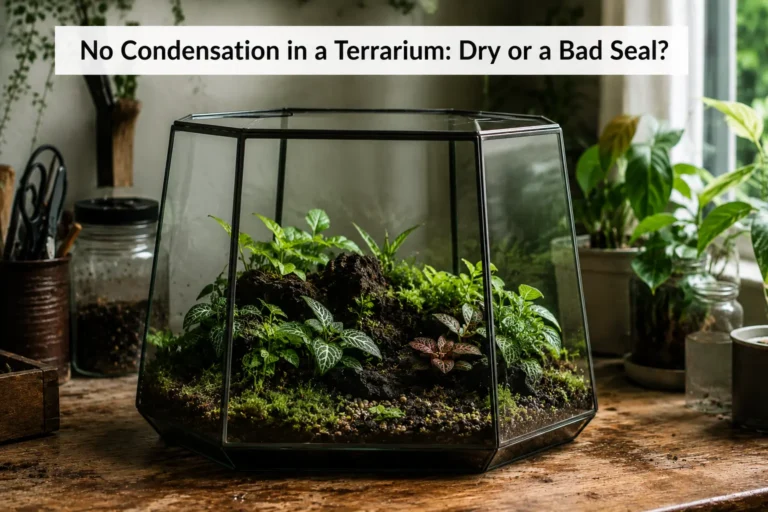
Days without any fog on the glass means one of two things: a leaking seal or a genuinely dry build. A simple test tells you which.