When to Restart a Terrarium: Rebuild or Save It?

How to tell whether a failing terrarium is worth saving or worth tearing down, judged by what you can see in the build, not by a countdown.

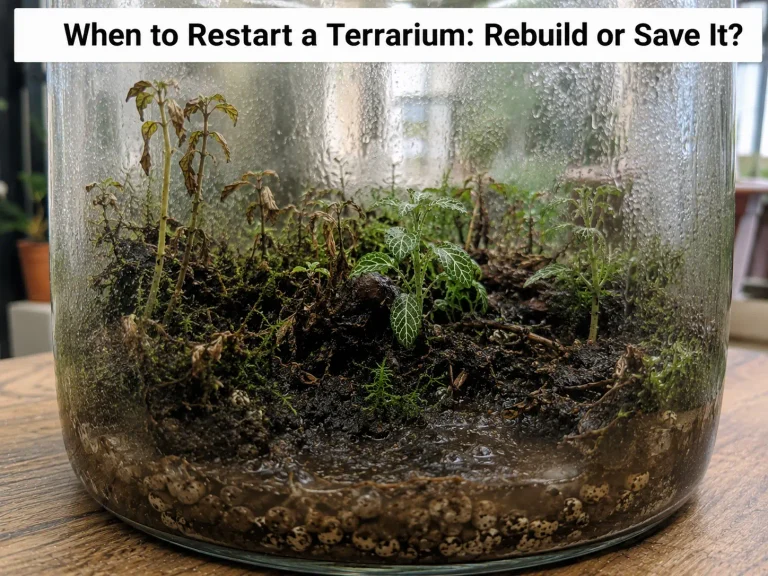
How to tell whether a failing terrarium is worth saving or worth tearing down, judged by what you can see in the build, not by a countdown.
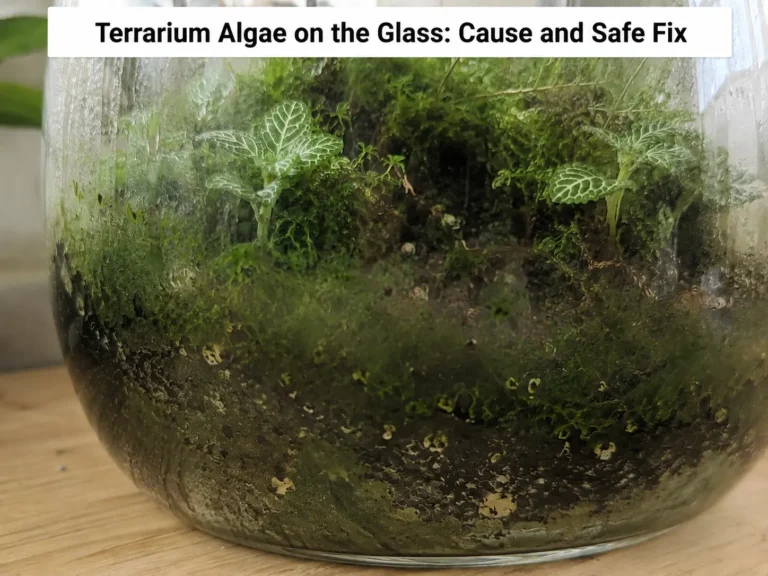
Green film on terrarium glass is usually harmless algae, not mold. Why it grows there, how to remove it safely, and what it’s telling you.
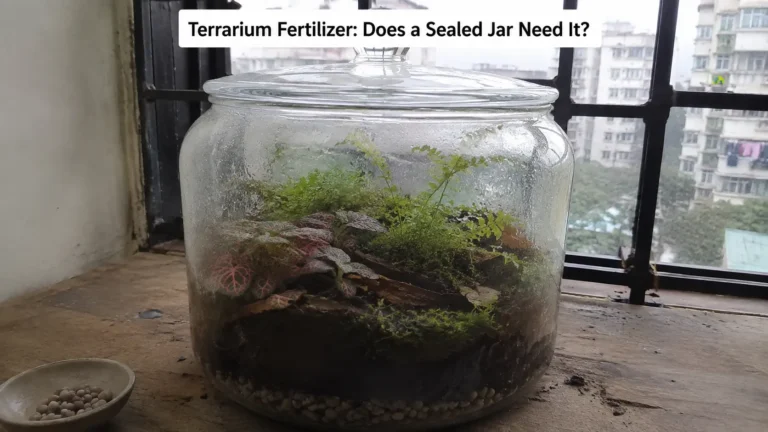
A closed terrarium recycles its own nutrients and cannot be flushed, so a feeding mistake stays in. Diagnose the real cause before you feed.
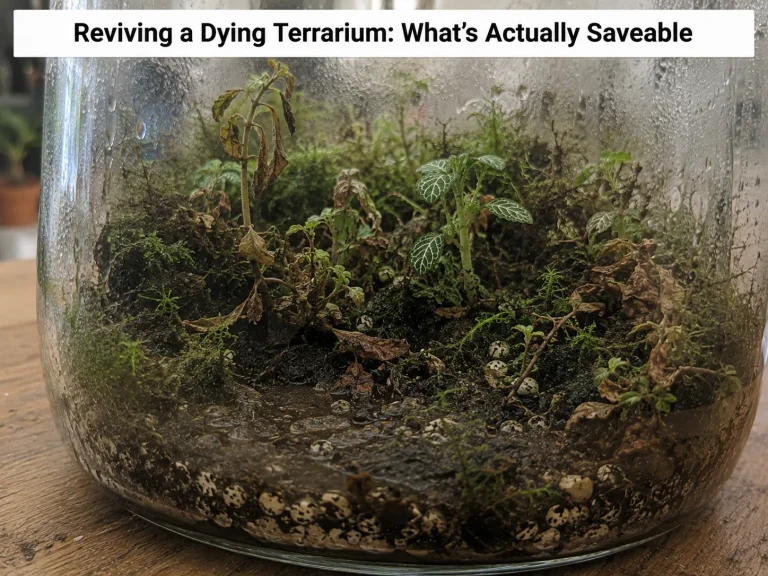
Before you trim or rebuild, test what’s actually dead versus just stressed. A practical triage guide for a terrarium that looks like it’s failing.

An open terrarium has no water cycle and no drainage hole. Why sealed-jar advice does not apply, and why the usual houseplant fix is impossible here too.
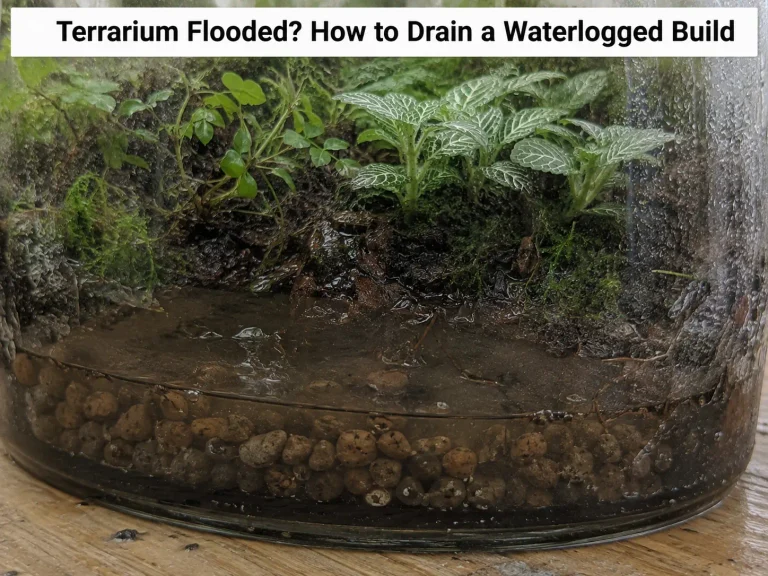
Standing water in a closed terrarium is a different problem from fog on the glass. How to remove it, why it matters, and when the build can be saved.
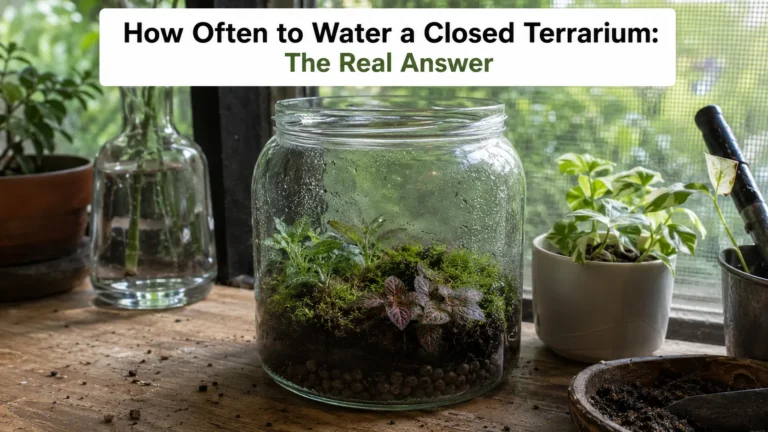
Nobody publishes a watering interval for a sealed jar, because there is no interval. The condensation cycle is the instrument. How to read it and what to add.

A cloudy terrarium haze that survives wiping is usually mineral film or true etching. Learn to tell them apart and what actually fixes each one.
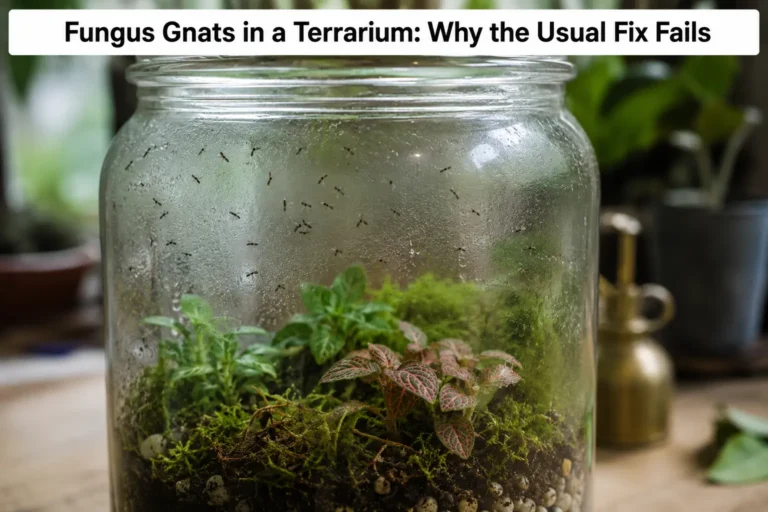
Tiny flies escaping when you open the lid. Why drying the substrate is not an option in sealed glass, and what actually works instead.
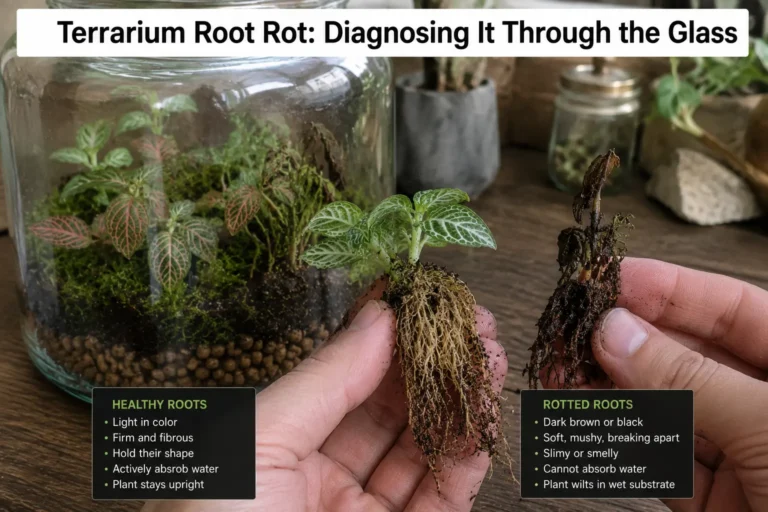
You do not want to dig the plant up to check. What terrarium root rot looks like from outside a sealed jar, which signs are reliable, and what to do next.