Container Size: How Small Is Too Small for a Closed Terrarium?

Nobody publishes a minimum size, so here is the physics that sets the floor instead: the layers, the air volume and the temperature swing a small jar cannot buffer.

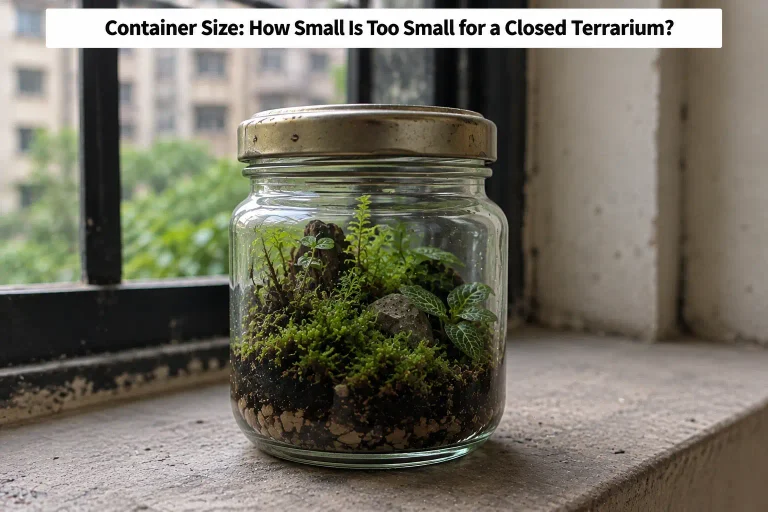
Nobody publishes a minimum size, so here is the physics that sets the floor instead: the layers, the air volume and the temperature swing a small jar cannot buffer.
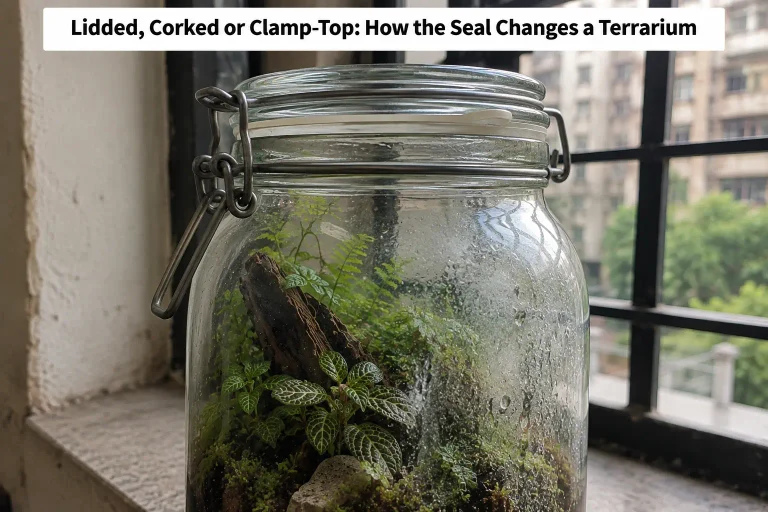
It does not need to be airtight. It needs to be tight enough for water to stay in, and the difference between those two things decides your whole build.

Almost anything glass can be a terrarium and most of what you own should not be. Four requirements decide it, and the seal is not the first one.
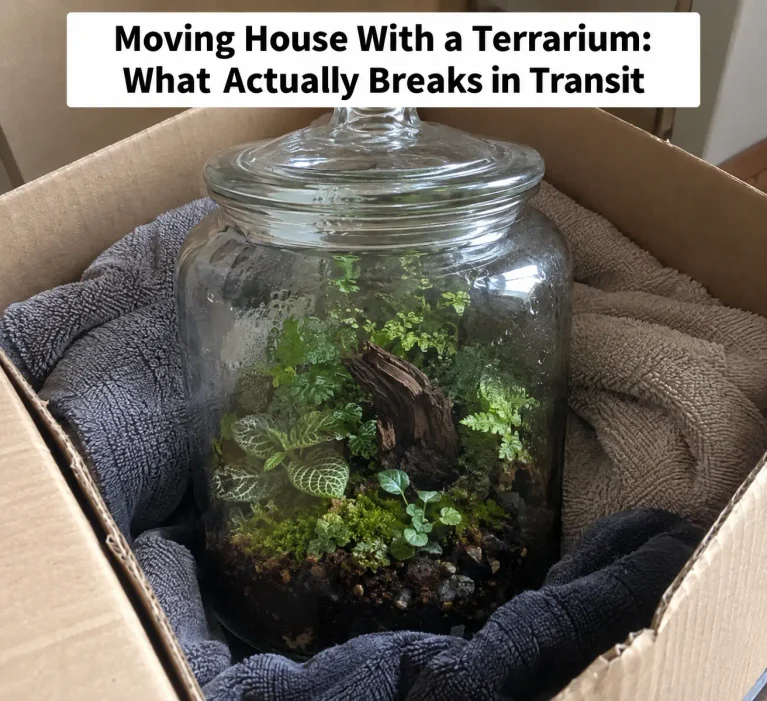
The glass is the least of it. Layers shift, hardscape topples, and a sealed jar in a hot car is an oven. Here is how to get one across town intact.
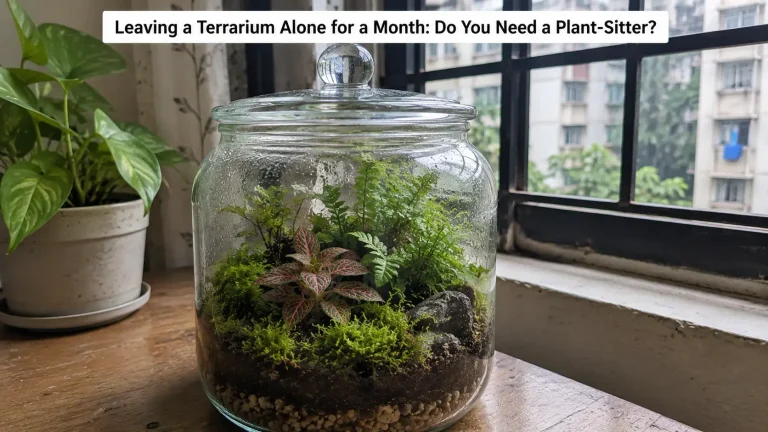
A sealed terrarium is the one plant in the house that does not need a sitter. The risk is not water. It is light and heat, and the fix takes five minutes.
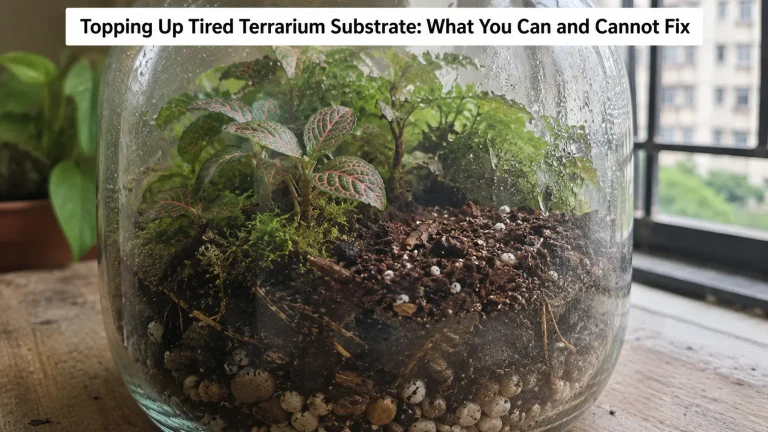
The soil has sunk and compacted. Adding more on top does not decompact anything, and a sealed jar has nowhere for the old material to go. Here is the honest read.

Opening the lid is not cheating and it is not free. Here are the four situations that justify it, the one that does not, and what you are actually resetting.
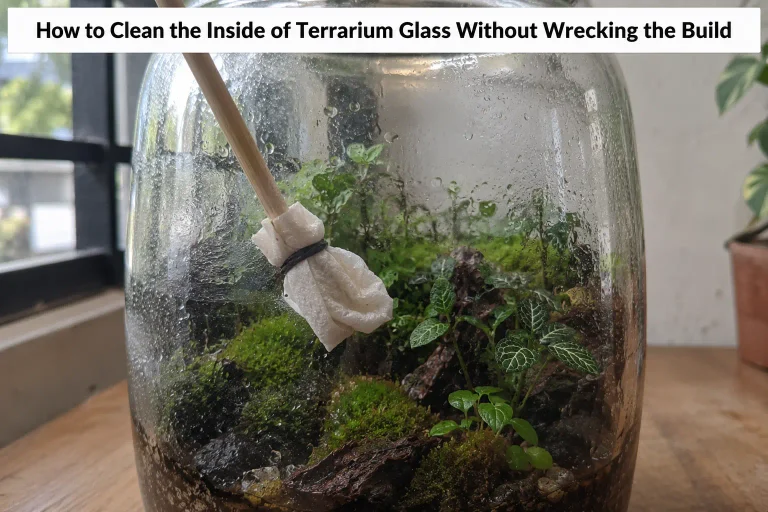
You cannot reach the inside without knocking something over, and you must not put cleaner in a sealed jar. Here is what actually works, and what the film is.
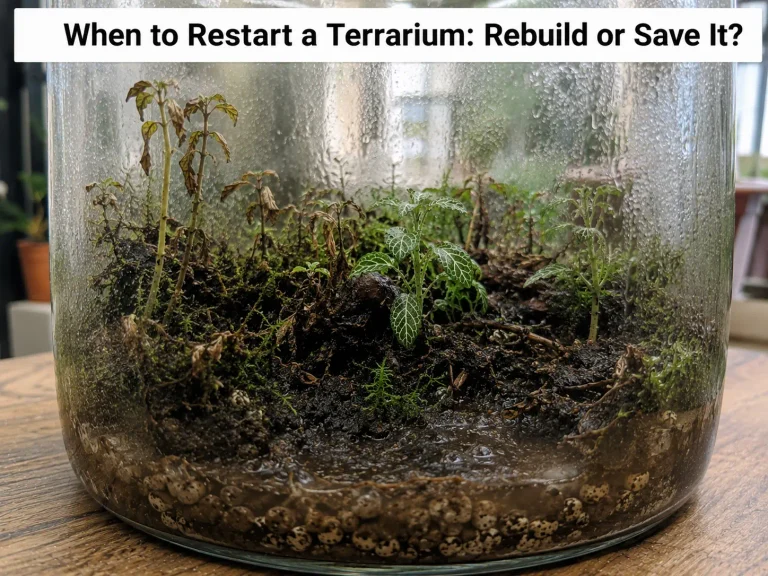
How to tell whether a failing terrarium is worth saving or worth tearing down, judged by what you can see in the build, not by a countdown.
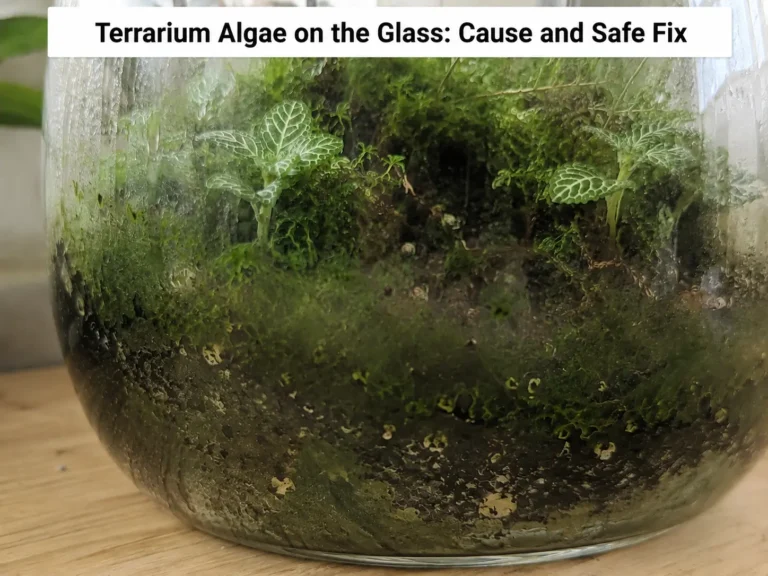
Green film on terrarium glass is usually harmless algae, not mold. Why it grows there, how to remove it safely, and what it’s telling you.