
Terrarium Cloudy Glass That Won’t Wipe Clean: Why

A terrarium haze that survives a normal wipe usually means one of two things: a mineral film from evaporated tap water that a proper cleaning pass will remove, or true glass etching, where the same deposit has bonded into the surface after months of repeated evaporation cycles and will not fully come off no matter how it is wiped. A quick dry wipe tells them apart: if the haze changes at all under a dry microfiber cloth, it is film and a wet cleaning pass will finish the job. If a dry wipe does nothing, it has likely etched, and that changes what is worth trying next. This is one specific read within the wider glass-reading framework this site uses for diagnosing a sealed build from the outside.
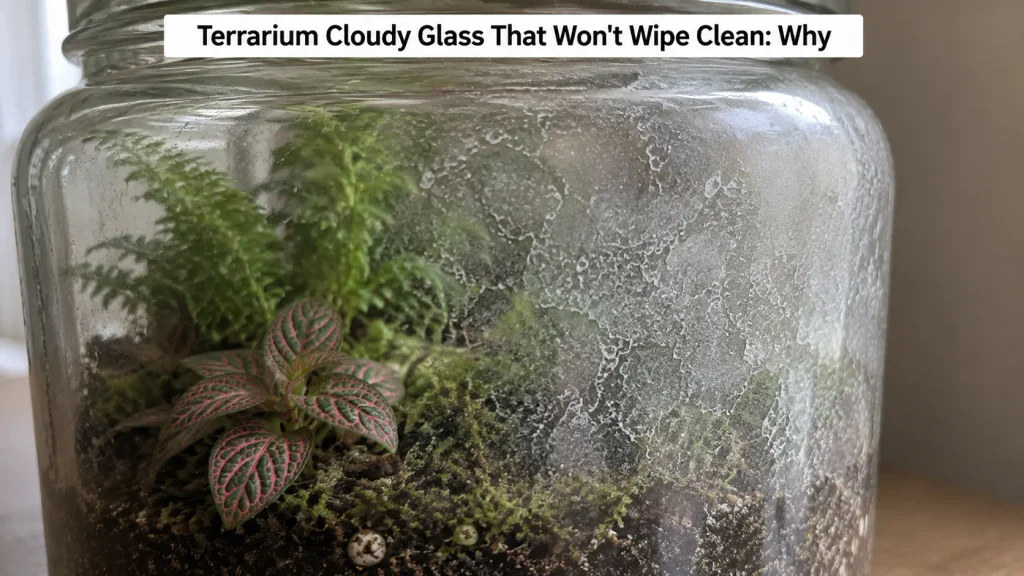
“I treat stubborn cloudy glass differently from normal condensation because the important question is whether the haze is sitting on the glass or has become part of its damaged surface. I start with the gentlest test on a small area rather than repeatedly scrubbing the whole jar. One useful clue I also watch for is haze that seems much less visible when the glass is wet but returns as it dries, because fine surface deterioration can scatter light differently once dry. Persistent cloudiness is not always removable dirt, and repeated aggressive cleaning can leave scratches that make visibility worse.”
Why the film forms in the first place
Ordinary tap water carries dissolved minerals, mainly calcium and magnesium compounds, even in water that tastes and looks perfectly clean. Inside a sealed terrarium, water does not simply run off and disappear the way it does watering an open pot outdoors. It evaporates from the substrate and plants, condenses on the glass, and cycles back down, over and over, for as long as the build exists. Every one of those evaporation events leaves behind a microscopic trace of whatever minerals were in the water, right at the spot where it evaporated. A single cycle leaves nothing visible. Hundreds of cycles over weeks and months, concentrated on the same interior glass surface, add up to a haze that a normal wipe increasingly struggles to touch.
This is the same chemistry behind hard-water spots on a shower door, just running continuously inside a sealed environment instead of intermittently in an open one, which is part of why it can build up faster than a reader expects from a bathroom comparison.
Not the same thing as algae
Worth ruling out before assuming mineral film: if the haze has any green or brown-green tint and comes back within days of a proper wipe, it is more likely a living algae film than a mineral deposit. The algae on the glass guide covers that case, including why it forms on the glass specifically and how the cleaning approach differs. True mineral film and etching are consistently white, gray, or slightly cloudy rather than green, and do not regrow the way a living colony does.
The fixable case: mineral film
If a dry cloth lifts even part of the haze, it is film sitting on the surface rather than bonded into it, and a proper wet pass usually clears it.
Mix a mild solution of white vinegar and distilled water, apply it lightly to the hazy area, and let it sit for a few minutes before wiping with a soft, lint-free cloth. For spots that resist that first pass, a small amount of baking soda mixed into a paste with distilled water, applied directly and left briefly, handles more stubborn deposits without needing anything stronger. Work in gentle, circular motions rather than pressing hard, and always finish with a rinse using distilled water rather than tap, since tap water reintroduces the same minerals that caused the problem in the first place.
Avoid paper towels or abrasive sponges on the inside of the glass. Both can leave fine scratches that themselves scatter light and read as a permanent haze even after the mineral deposit is gone, which turns a fixable problem into an unfixable-looking one through the cleaning method rather than the original cause.
The permanent case: true etching
Etching is the same mineral deposit, but it has had long enough contact with the glass, cycling on and off the same spot repeatedly, that it has effectively micro-bonded into the surface rather than sitting loosely on top of it. At that point a normal cleaning pass, and often even the vinegar and baking soda methods above, will lighten it somewhat but will not restore full clarity. This tends to happen gradually over months in a build that has always used tap water, rather than appearing suddenly, and it concentrates most heavily wherever condensation runs down consistently, since that is the spot getting the most repeated evaporation cycles.
There is no honest fix for true etching short of replacing the container, which is rarely worth doing for cosmetic haze alone. The distinction matters because it changes what is worth attempting: escalating to a razor blade or a stronger acid to chase a full clean on etched glass risks scratching the surface for a result that will not fully return anyway, trading one permanent mark for another.
How to tell which one you have
Run this quick test before committing to a full cleaning session.
| Mineral film | True etching | |
|---|---|---|
| Dry wipe test | Lightens or clears in spots | No change |
| Distilled-water wet pass | Clears fully | Lightens only, does not fully clear |
| Typical age of build | Weeks | Many months, always tap water |
| Where it concentrates | Wherever evaporation is heaviest | Same spot, over a much longer period |
| Fix | Vinegar and baking soda methods below | Manage going forward; no full fix |
Dry wipe first. Buff the hazy area with a dry microfiber cloth, no water or solution. If it visibly lightens or clears in spots, it is film, and the wet method above will likely finish the job.
If the dry wipe does nothing, move to a light wet pass with distilled water alone, no vinegar yet. Still no change after that pass on a small test section usually means etching rather than fresh film.
Consider the history. Film that appeared over a few weeks in a build that has used tap water throughout, especially concentrated where condensation runs, is more consistent with early-stage film than long-set etching. A build that is many months old and has never used distilled water is a more likely candidate for genuine etching by the time it becomes noticeable.
What to do once it is etched
Etched glass is a cosmetic condition to manage rather than a cleaning problem to keep fighting. Switching to distilled or filtered water for any future watering slows further buildup meaningfully, even though it will not reverse what has already bonded into the glass. Positioning the terrarium so the etched face is against a wall or a less-viewed angle keeps the clearer sides available for actually watching the build. And it is worth being honest that continuing to scrub at fully etched glass with progressively harsher methods rarely produces a result worth the risk of a visible scratch on top of the existing haze.
Preventing it in future builds and refills
The single most effective prevention is using distilled or filtered water from the very first watering onward rather than tap water, since it removes the mineral source at the root rather than trying to manage its buildup later. The first watering guide covers water choice as part of setting up the build correctly the first time. Wiping the interior glass on a light, regular schedule while the film is still fresh also helps, since fresh film wipes away far more easily than film that has had weeks to accumulate on the same spot. And reading the condensation pattern periodically, covered in the too much condensation guide, helps identify which face of the glass is doing the most cycling and therefore the most likely candidate for future haze.
FAQ
Is cloudy terrarium glass dangerous to my plants? No. Mineral film and etching are cosmetic conditions on the glass itself and do not affect plant health directly. They only become a practical issue if the haze gets heavy enough to noticeably block light from reaching the plants, which is uncommon.
Will vinegar hurt my terrarium if I use it to clean the glass? A mild, diluted vinegar solution applied carefully to the glass and wiped away is generally safe, but avoid letting it drip into the substrate or contact living moss or plant tissue, since full-strength acid can disrupt the substrate’s microbial balance and stress moss rhizoids.
How do I know if it’s mineral film or permanent etching? A dry wipe with a microfiber cloth is the fastest test. If it lightens or clears at all, it is film and a wet cleaning pass will likely finish the job. If a dry wipe changes nothing, and a light distilled-water pass also does nothing, it has likely etched.
Can I prevent cloudy glass by using distilled water from the start? Yes, and this is the single most effective prevention available. Tap-water minerals are the source of both film and eventual etching, so removing them from every watering going forward slows the buildup significantly.
Is scraping the glass with a blade safe? It carries real risk of scratching the glass, especially on etched areas where the deposit has already bonded to the surface. It is a last-resort method at best, and even then only worth attempting with a fresh, clean blade held at a shallow angle and very light pressure, never on a build with plants still inside.